Wheat Spraying with Drone – Effective Crop Protection
Bulgaria is among the leading wheat producers in Southeastern Europe. With over 1.2 million hectares of sown area each year, wheat is the main crop for Bulgarian agriculture. A successful harvest depends enormously on timely and correct crop protection – fighting diseases, weeds and pests. This is precisely where wheat spraying with a drone is establishing itself as a modern and effective solution that more and more agricultural producers in Bulgaria are choosing.
In this article we will look at how drone technology provides precise protection of wheat crops, when to spray, what preparations are applied and what advantages it offers over conventional methods.
Why Wheat Spraying with a Drone Is the Future of Agriculture
Traditional ground spraying has its limitations – heavy machinery compacts the soil, cannot work in wet conditions and inevitably tramples part of the crop. With wheat drone spraying, these problems disappear completely.
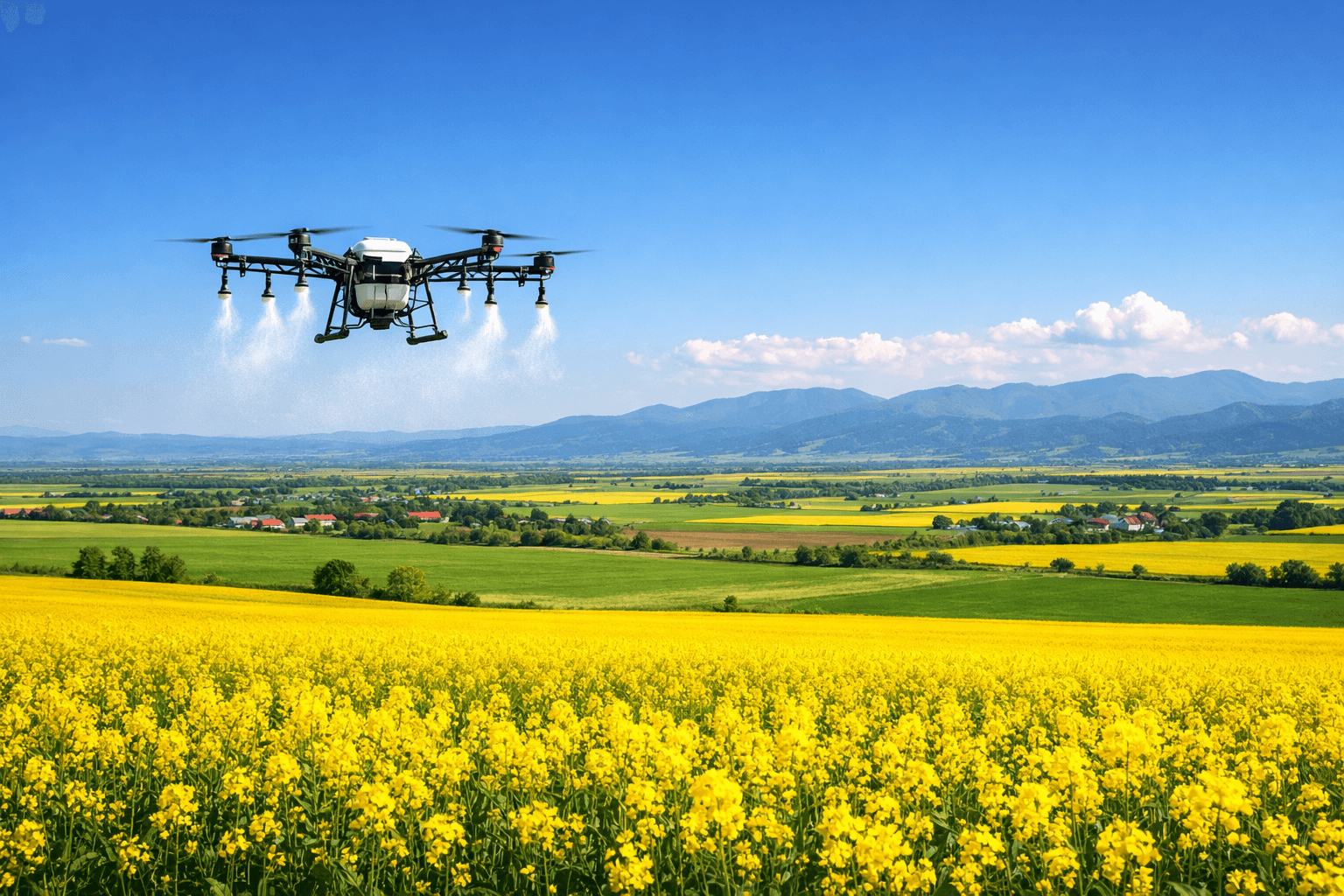
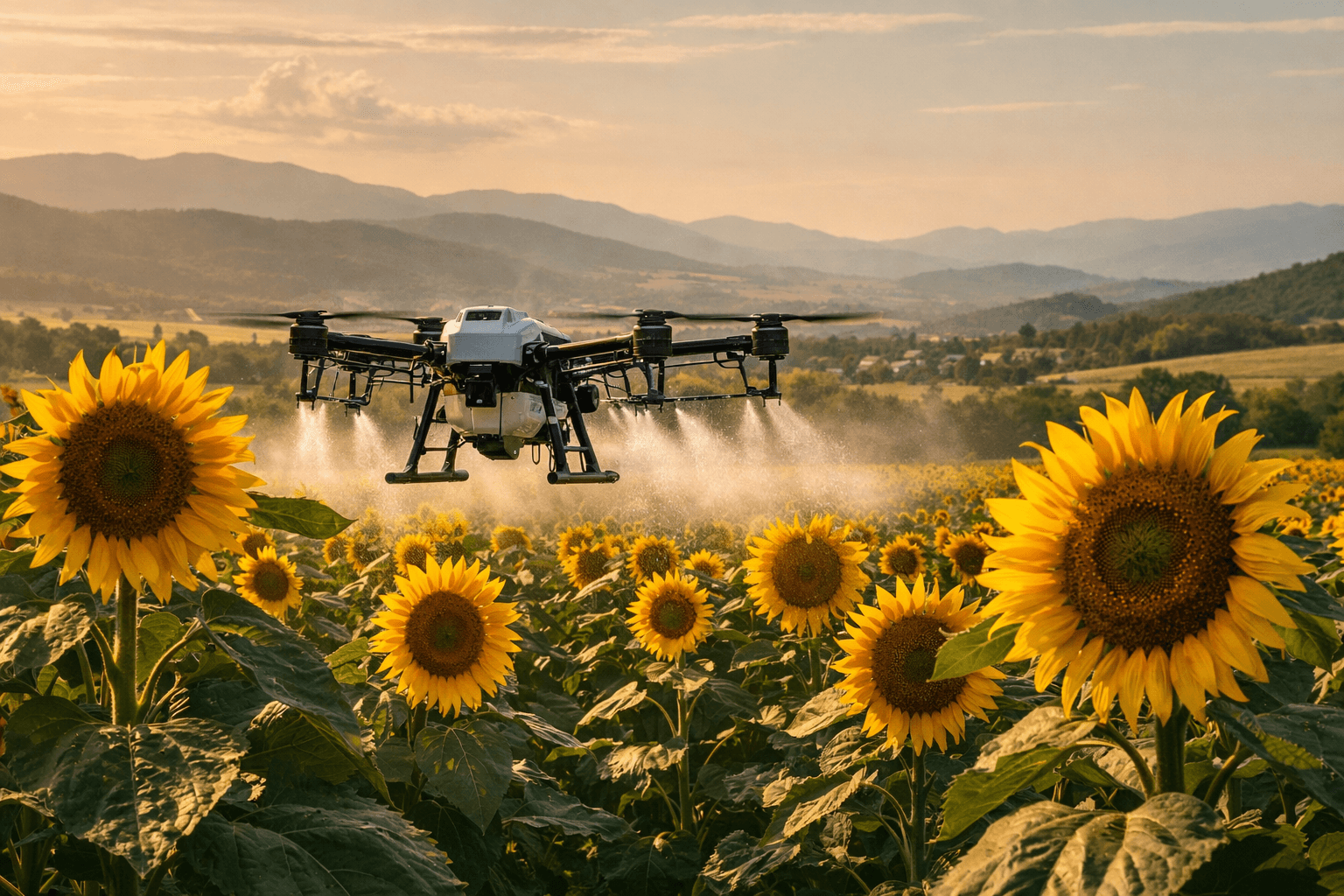
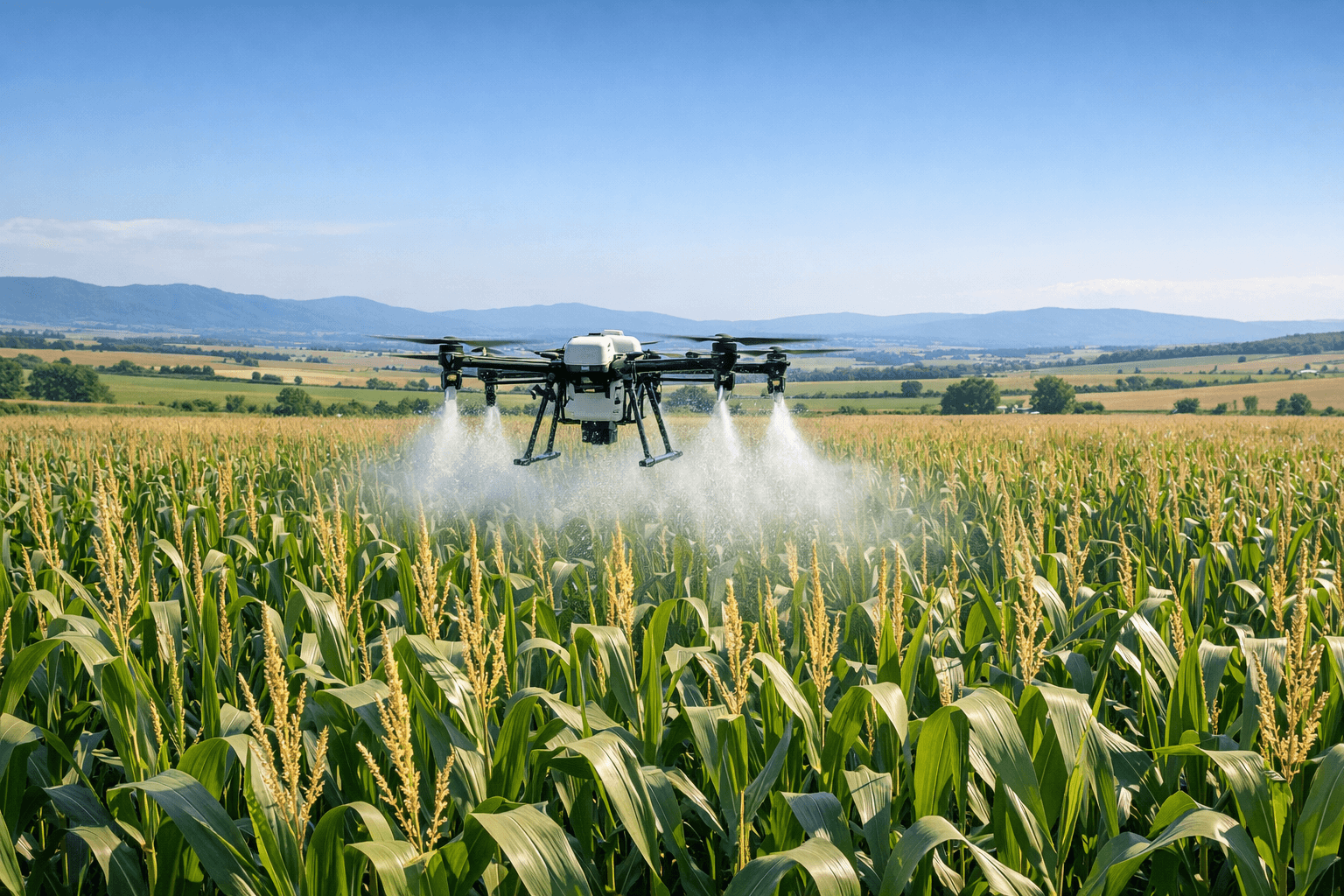
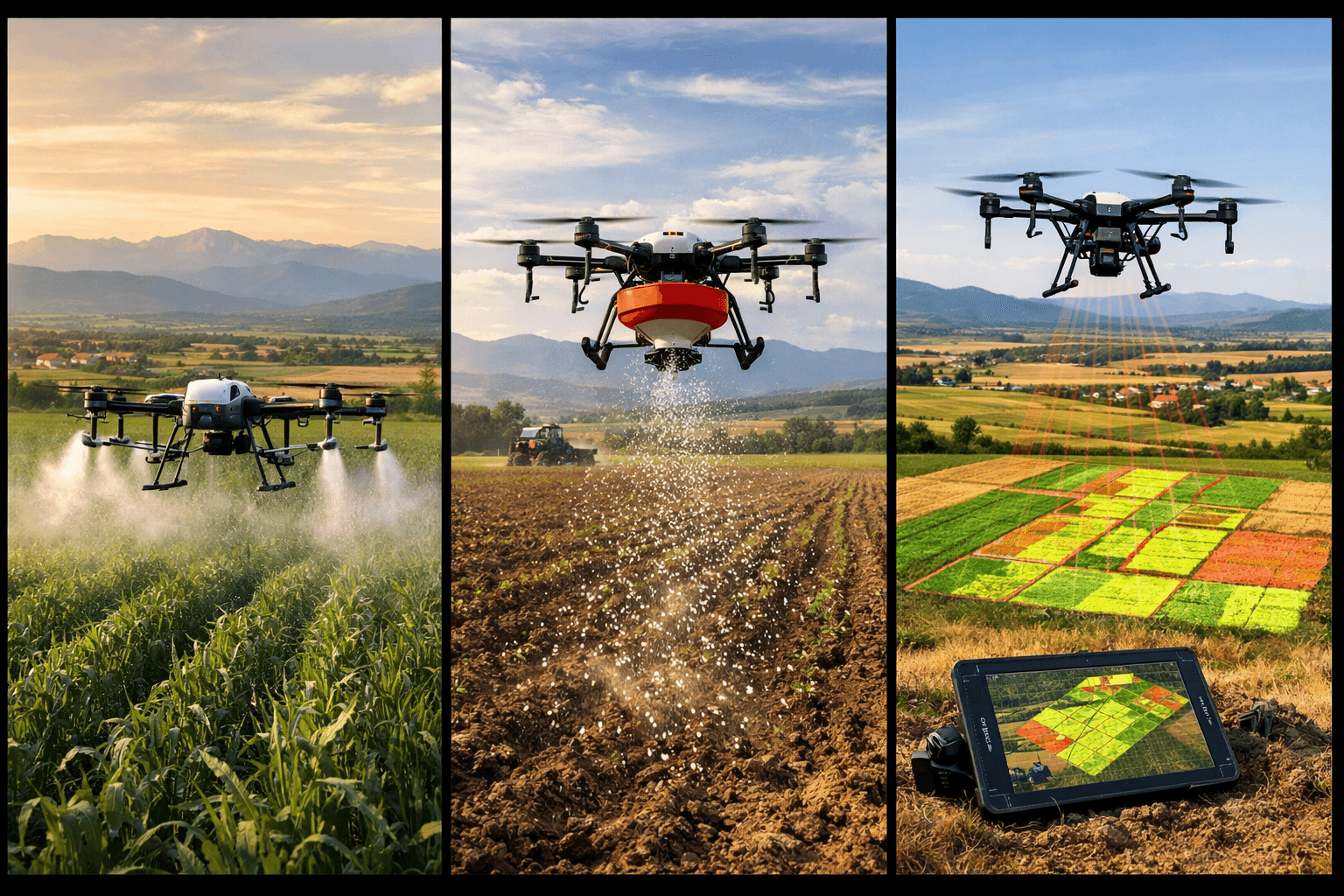
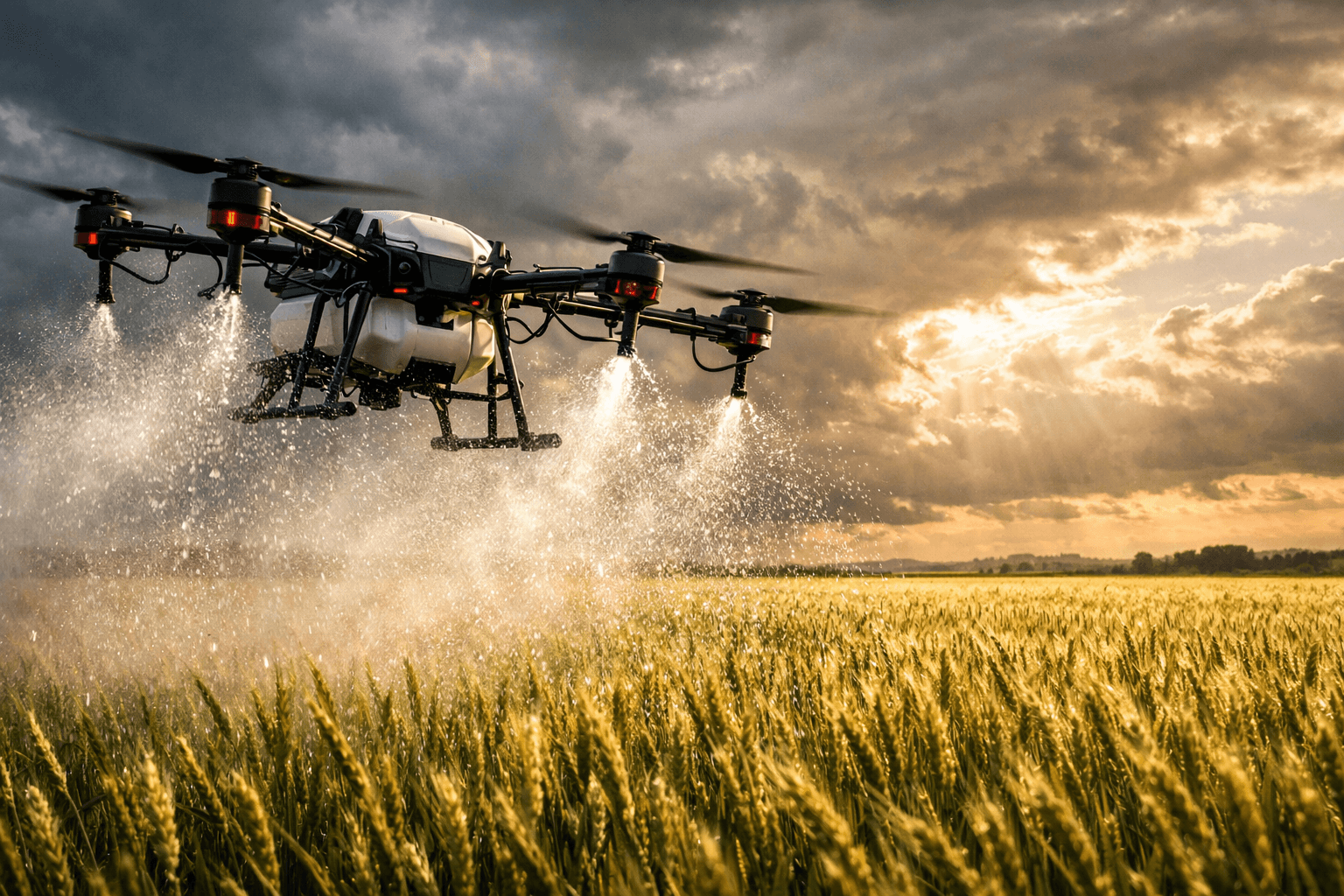
Agricultural drones like the DJI Agras T50 fly several metres above the crops and distribute preparations evenly without touching the plants. This is especially important for wheat, as any trampling means direct harvest loss.
Key Advantages of Drone Spraying for Wheat
- Zero crop trampling – the drone does not enter the field, preserving every stalk
- Uniform coverage – special nozzles provide fine dispersion of the preparation
- Fast treatment – the DJI Agras T50 treats up to 200 decares per hour
- Ability to work in wet conditions – when ground machinery cannot enter the field
- Precise dosing – GPS navigation guarantees exact application without gaps or overlap
Wheat Development Phases and Suitable Treatment Times
For crop protection to be effective, it is important to know the wheat development phases and choose the right moment for treatment. Learn more in our article on when to spray wheat.
Autumn Treatment (after emergence)
After wheat emergence in autumn, the main concern is weed control. Herbicide treatment in this phase is key to reducing nutrient competition. With a drone this treatment is performed quickly and without soil compaction, which in autumn is often wet.
Spring Tillering (tillering phase)
In the tillering phase (usually March–April) wheat is actively developing and vulnerable to diseases such as powdery mildew and rust. Drone spraying enables timely intervention even when the terrain is softened by spring rains.
Stem Elongation and Heading Phase
This is the critical period for fungicide spraying of wheat. Diseases such as septoria, Fusarium and rust can cause serious damage. The drone provides precise coverage of the upper leaves and ears, which is decisive for protection.
Grain Filling Phase
In this late phase the drone is indispensable for foliar fertilization of wheat with microelements and liquid fertilizers. Entry with heavy machinery would cause significant damage to the already tall plants.
What Preparations Are Applied When Spraying Wheat with a Drone
Herbicides for Weed Control
Weeds are among the most serious threats to wheat crops. In weed control in wheat, the drone provides precise herbicide application, which reduces preparation consumption and increases effectiveness. Most commonly, selective herbicides are applied that destroy weeds without damaging the wheat.
Fungicides for Disease Control
Fungicide spraying is mandatory for every wheat field in Bulgaria. The main diseases treated include:
- Septoria – one of the most widespread wheat diseases in the country
- Powdery mildew – especially in wet spring conditions
- Brown and yellow rust – can cause 30–40% yield loss
- Fusarium head blight – dangerous not only for yield but also for grain quality
The DJI Agras T50 drone disperses fungicides with fine dispersion, guaranteeing better coverage of the leaf mass compared to ground sprayers.
Insecticides against Pests
When attacked by grain bug, wheat stem sawfly or aphids, rapid treatment is necessary. The drone can respond within hours – while organising ground spraying may take days, especially in unfavourable terrain conditions.
Foliar Fertilizers and Growth Regulators
Besides crop protection, the drone is successfully used for foliar feeding with microelements (manganese, zinc, copper) and for applying growth regulators that prevent wheat lodging.
How Wheat Drone Spraying Works in Practice
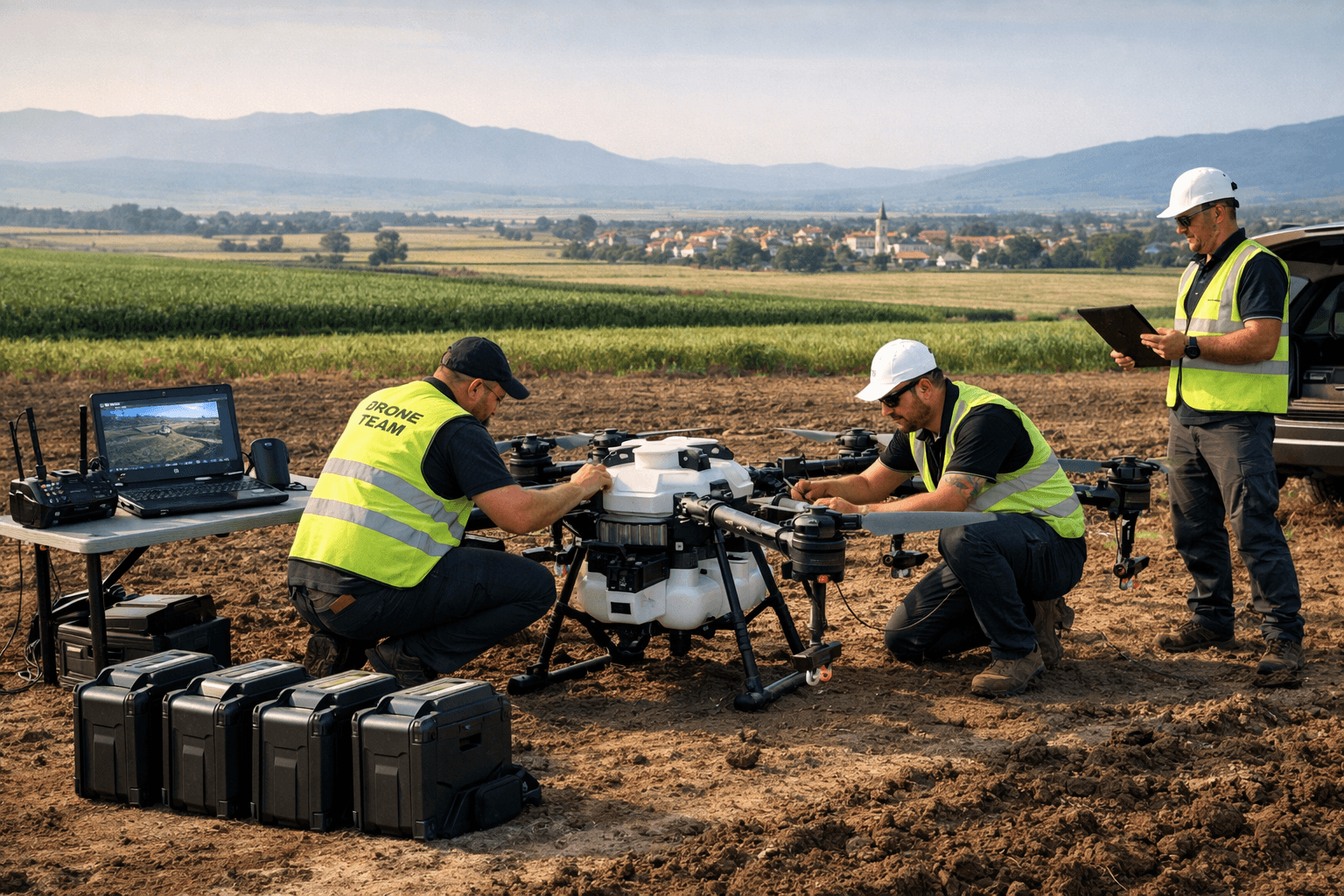
The process of drone wheat spraying is organised and effective. Here is how it works with the AirAgro team:
- Consultation and planning – discussing the needs of the specific crop, selecting preparations and determining dosages
- Field mapping – the GPS coordinates of the field are entered into the drone system
- Preparation of the solution – preparations are mixed in precise proportions
- Automated spraying – the DJI Agras T50 drone flies along pre-set routes with centimetre precision
- Monitoring and report – after treatment the grower receives a report on treated areas
The entire process is much faster than conventional spraying. For detailed information see our drone spraying services page.
Advantages of Drone Spraying vs Ground Spraying for Wheat
Economic Effectiveness
Many farmers ask about the cost of drone spraying. The truth is that although the price per decare may appear similar to ground spraying, real savings come from:
- Less water consumption – the drone works with 1–2 litres per decare vs 20–30 litres with ground spraying
- Less preparation consumption – precise application reduces waste
- No trampling – 3–5% of crop is saved that would otherwise be destroyed by machinery wheels
- Speed – fewer working hours means lower operating costs
Environmental Benefits
Wheat drone spraying is more environmentally friendly. Less water and preparation means less burden on the soil and groundwater. Precise application limits the spreading of chemicals outside the target area.
Flexibility in Different Conditions
In Bulgarian conditions spring weather is unpredictable. Frequent rains can make fields impassable for heavy machinery. The drone has no such limitation – it can work even when the soil is wet, as long as wind conditions allow. This is a critical advantage, as a delay of even a few days can lead to significant losses.
Practical Tips for Wheat Drone Spraying
Optimal Time of Day
The most suitable time for spraying is early morning (before 10:00) or in the evening (after 17:00), when temperatures are lower and wind is calmer. This ensures better preparation absorption and reduces evaporation.
Meteorological Conditions
- Wind: up to 3–4 m/s for optimal results
- Temperature: between 10°C and 25°C
- Humidity: above 50% is preferred for better absorption
- No rain within 2–3 hours after treatment
Flight Height and Speed
When spraying wheat the drone usually flies at 2–3 metres above the crops. Speed is adjusted according to dosage and crop density. All of this is calibrated by the experienced AirAgro team for maximum effectiveness.
Context: Wheat and Bulgaria
Bulgaria is a traditional producer of high-quality wheat. The main wheat regions are Dobrudzha, the Thracian Plain and the Danubian Plain. The climatic conditions in these regions are ideal for growing winter wheat, but at the same time they favour the development of diseases and weeds.
AirAgro actively serves wheat farms in key grain-producing regions – from the vast fields in Dobrudzha, through the Thracian Plain around Plovdiv, Stara Zagora and Pazardzhik, to the Haskovo area. Our team knows the specifics of each region and offers adapted crop protection solutions.
With the modernisation of Bulgarian agriculture, more and more farmers are looking for innovative solutions to increase yields and reduce costs. Wheat drone spraying is exactly such a solution – proven effective, fast and economical.
Frequently Asked Questions
How many decares of wheat can a drone treat in a day?
With the DJI Agras T50 and good organisation it is possible to treat up to 1,500–2,000 decares per day. This is many times more than conventional methods. Learn more about drone daily capacity.
Is drone spraying safe for wheat?
Absolutely. The drone does not touch the plants, and fine dispersion of the preparation provides gentle and even coverage. There is no mechanical damage to the crops.
Can the drone spray in wind?
The DJI Agras T50 can work in wind up to 5–6 m/s, but for optimal wheat spraying results we recommend wind up to 3–4 m/s.
Are special permits required for drone spraying?
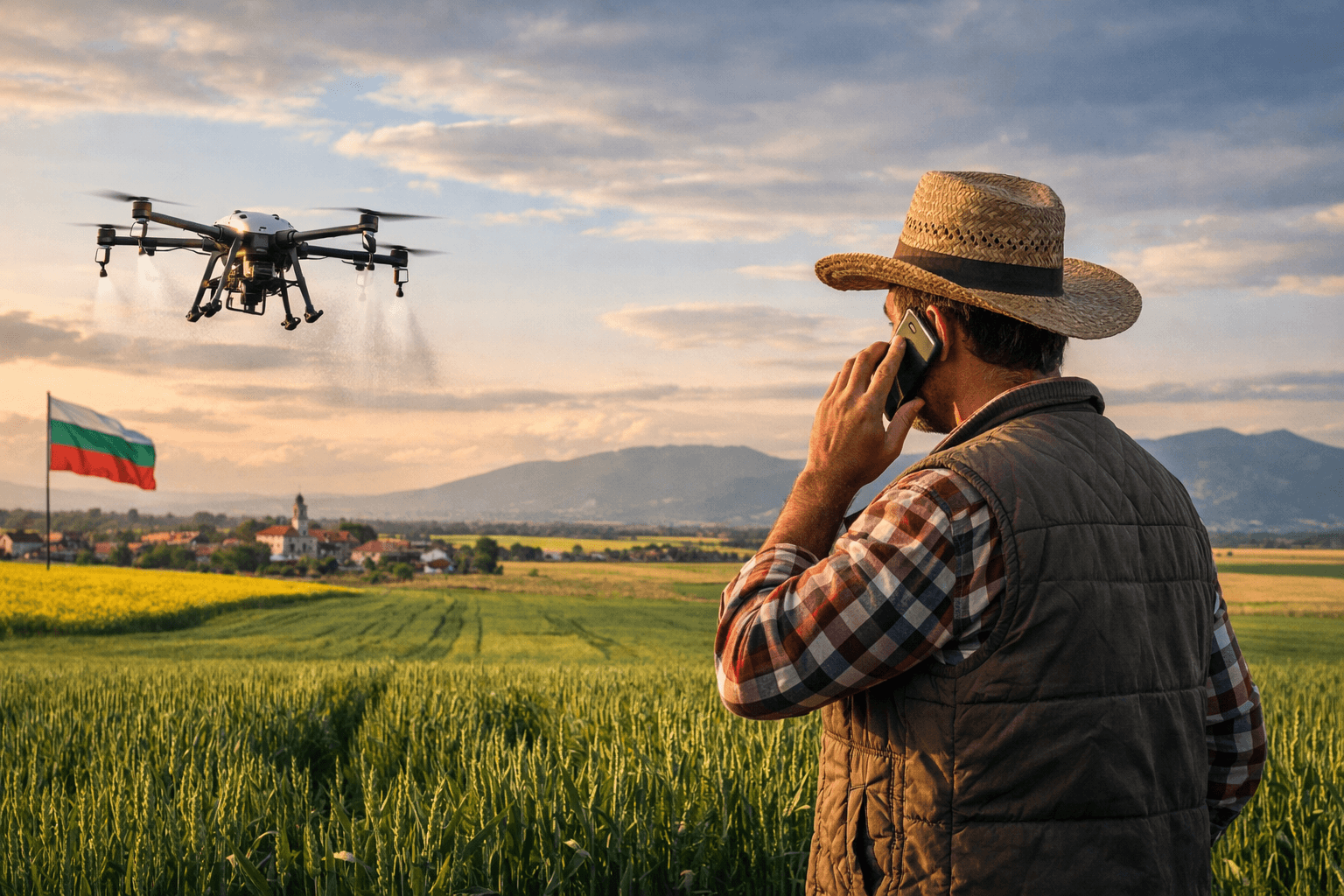
AirAgro holds all necessary permits and certificates for performing aerial treatment. You just call us, and we take care of everything else.
How Does Drone vs Tractor Compare for Wheat?
For a detailed analysis of costs and benefits of the two methods, read our article on drone or tractor for spraying. In summary: for wheat the drone wins on trampling (zero vs 3-5%), speed (5-10x faster) and weather flexibility (works when tractor cannot enter).
Request a Free Consultation for Wheat Drone Spraying
Do not let diseases and weeds reduce your yield – act in time with AirAgro!
Here is what we offer to every wheat grower:
- Free consultation and farm inspection – our agronomist will visit your fields and assess the condition of the crops
- Individual treatment plan – detailed spraying schedule tailored to the development phase and phytosanitary situation
- Drone demonstration of the DJI Agras T50 – see the technology in action before making a decision
- Fast execution – treatment of up to 2,000 decares daily without trampling and without losses
We serve farms in Dobrudzha, the Thracian Plain, Plovdiv, Stara Zagora, Pazardzhik, Haskovo and throughout the country.
Contact us:
- 📞 Call us at +359 884 242 406 for a free consultation
- 🌐 Visit airagro.bg and request a farm inspection
- 📋 Request drone spraying services today
The first step is free – call and request a consultation and farm inspection. Together we will prepare a treatment plan that will protect your harvest and increase your yield!