Fungicide Spraying of Wheat – When and How to Protect Crops
Fungicide spraying of wheat is one of the most critical operations in crop protection, directly determining the final yield and grain quality. Every year fungal diseases cause losses of 15 to 40% in wheat in Bulgaria, and in years with a wet and warm spring these figures can be even higher. Correctly determining the timing of treatment and choosing the appropriate fungicide are key to successful farming.
In this article we will examine the main fungal diseases of wheat in Bulgaria, the optimal timing for fungicide spraying, and how modern technologies, including DJI Agras T50 drones, are changing the way we protect crops.
Main Fungal Diseases of Wheat in Bulgaria
In order to apply effective fungicide spraying of wheat, we must first know the diseases we are combating. In Bulgarian conditions the most widespread are the following diseases.
Septoria (Septoria tritici and Septoria nodorum)
Septoriosis is undoubtedly the most widespread and most damaging disease of wheat in our country. It is caused by the fungus Zymoseptoria tritici (leaf septoria) and Parastagonospora nodorum (nodorum blight). Infection starts from the lower leaves and gradually moves upward, reaching the flag leaf and ear.
Symptoms include light brown to yellowish spots with dark pycnidia (small black dots), visible to the naked eye. In wet and cool conditions the disease develops extremely rapidly. Losses from septoria can reach 30–50% in unprotected crops.
Brown Rust (Puccinia recondita)
Brown rust is another widespread disease, especially in Southern Bulgaria – the areas of Plovdiv, Stara Zagora, Pazardzhik and Haskovo, where the warmer climate favours its development. In Dobrudzha and the Thracian Plain, brown rust manifests most strongly at temperatures of 15–22 °C and high humidity. Small brown pustules arranged randomly appear on the leaves. In mass development, leaves yellow prematurely and grain remains shrivelled. Optimal conditions for its spread are temperatures from 15 to 22 °C and high humidity.
Yellow Rust (Puccinia striiformis)
Yellow rust manifests through characteristic yellow-orange pustules arranged in stripes along the leaf veins. Although less common than brown rust, in certain years it causes severe damage, especially in a cooler and wetter spring. It can cause losses exceeding 40% if not controlled in time.
Fusarium Head Blight (Fusarium graminearum)
Fusarium head blight is especially dangerous because besides reducing yield, it contaminates grain with mycotoxins (DON, zearalenone), which can render it unfit for food or feed. Infection occurs during flowering, when the ears are open and humidity is high. Affected spikelets bleach prematurely and differ from healthy ones.
Powdery Mildew (Blumeria graminis)
Powdery mildew manifests as a white flourish on leaves and stems. It is usually more common at the beginning of vegetation and in dense crops with excessive nitrogen fertilisation. Although it rarely causes critical losses on its own, it weakens plants and makes them more vulnerable to other diseases.
When to Spray – Optimal Timing for Fungicide Treatment
The right timing for fungicide spraying of wheat is of decisive importance. Applying fungicides too early or too late significantly reduces their effectiveness. In modern agriculture a system of three main treatments is used, designated T1, T2 and T3.
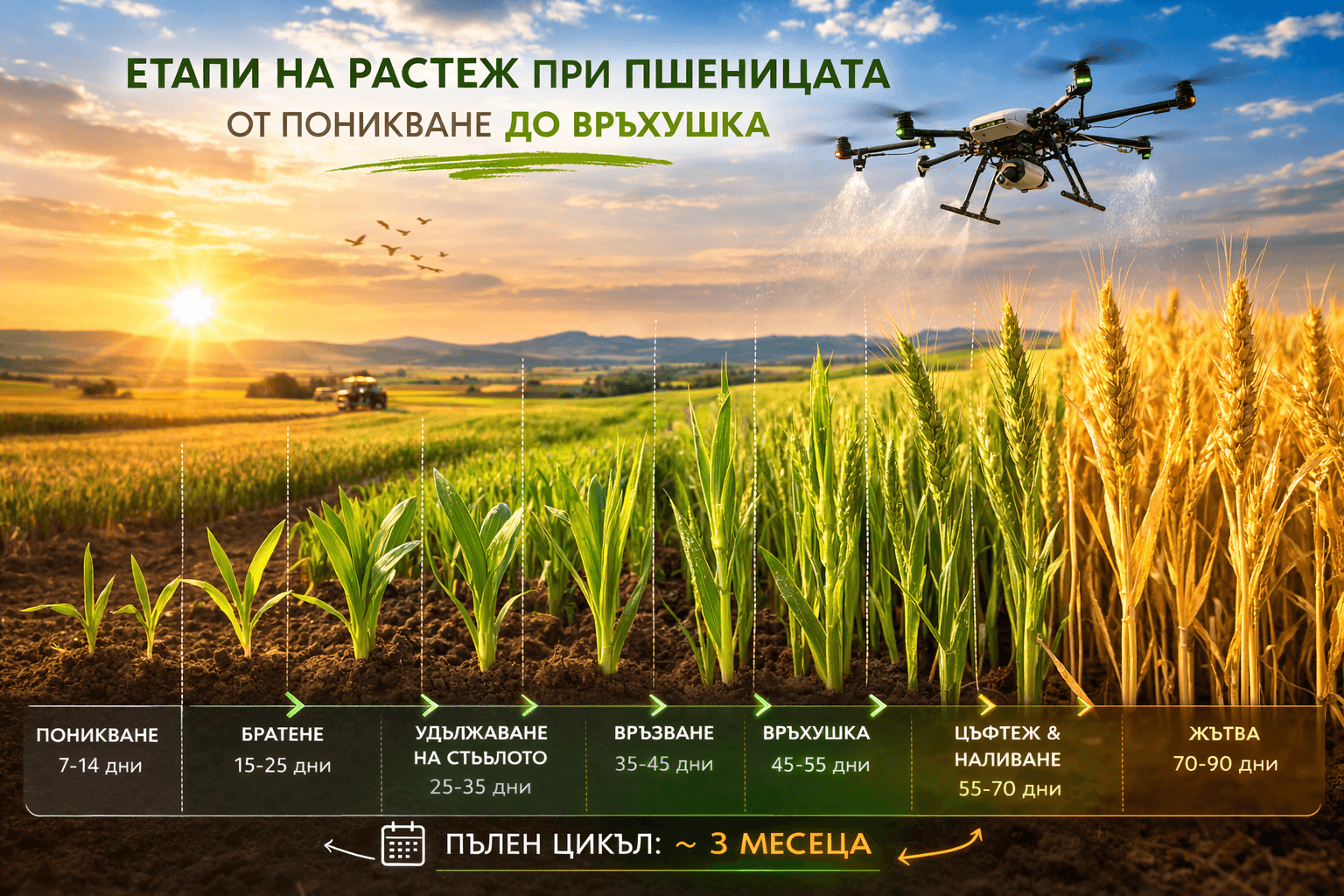
T1 – First Treatment (Stem Elongation Phase, BBCH 31–33)
The first fungicide treatment is carried out at the beginning of stem elongation, when wheat forms its first and second internodes. The aim of T1 is to protect the middle leaves from septoria and early rust attacks. In this period combinations of triazole fungicides with contact products are usually used.
The T1 treatment is especially important in years with early and intensive septoria development, as is often observed during mild and wet winters. If you skip T1, the infection may establish itself on the upper leaves before the T2 treatment.
T2 – Second Treatment (Flag Leaf Stage, BBCH 39–49)
T2 is the most important fungicide treatment in the entire wheat crop protection scheme. It is applied when the flag leaf is fully emerged. The flag leaf provides up to 45% of the photosynthetic activity needed for proper grain filling. Protecting it is an absolute priority.
For T2 the most effective and modern fungicide combinations are used – usually including SDHI (succinate dehydrogenase inhibitors) together with triazoles and/or strobilurins. This treatment covers a broad spectrum of diseases: septoria, rusts, powdery mildew.
T3 – Third Treatment (Anthesis Stage, BBCH 61–65)
The third treatment is aimed mainly at fusarium head blight. Its necessity is assessed according to the forecast for rain during flowering and the previous crop. If wheat follows maize or another cereal predecessor, the risk of fusarium is considerably higher.
For T3 fungicides based on tebuconazole, prothioconazole or metconazole are usually applied, which have proven efficacy against fusarium species.
Why Drones Are the Ideal Solution for Fungicide Spraying of Wheat
Fungicide treatment requires exceptional precision in terms of timing. The problem is that precisely when spraying is needed – during wet and rainy periods – ground machinery often cannot enter the field. Wet soil makes fields impassable for tractors and self-propelled sprayers, and every day's delay reduces treatment effectiveness.
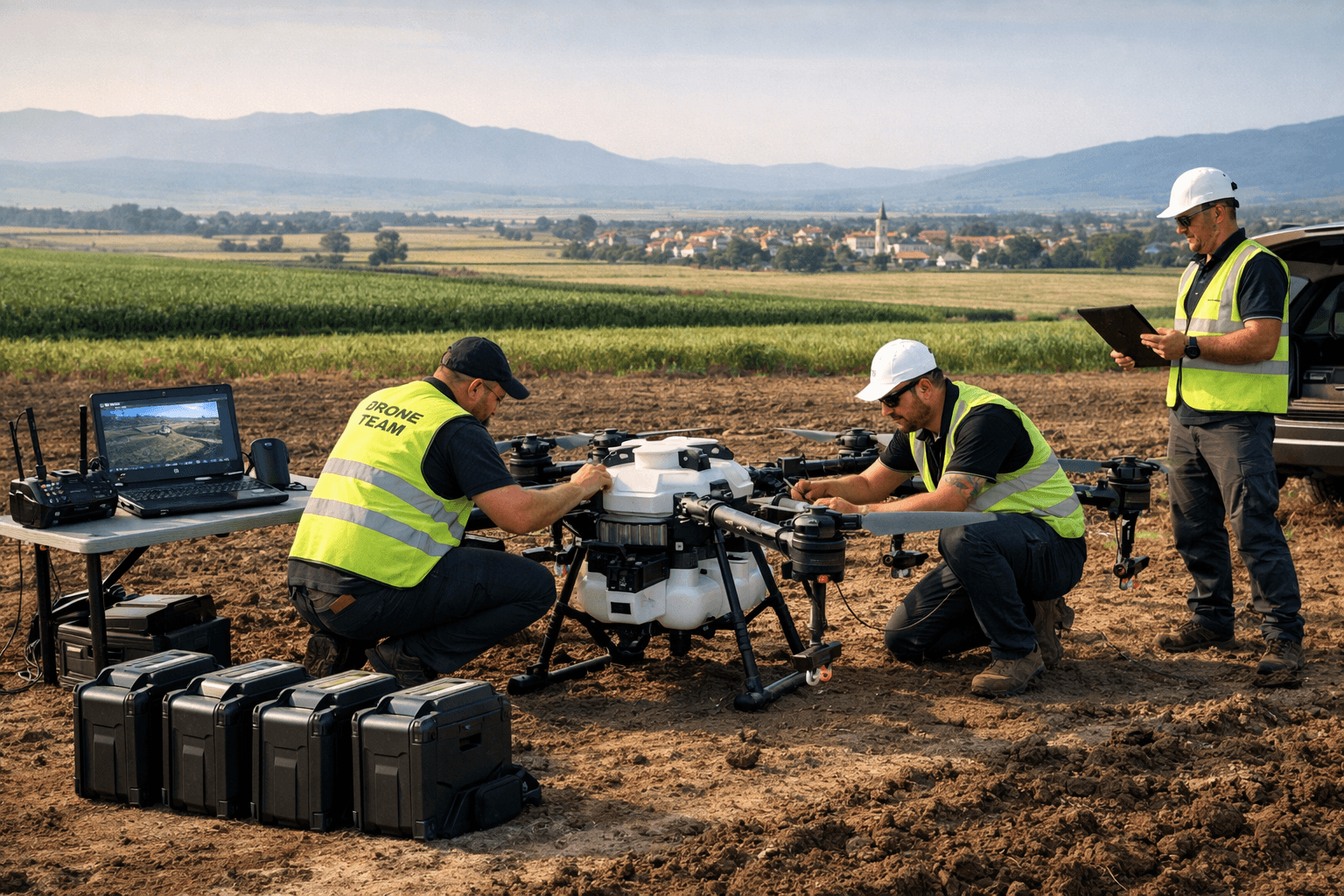
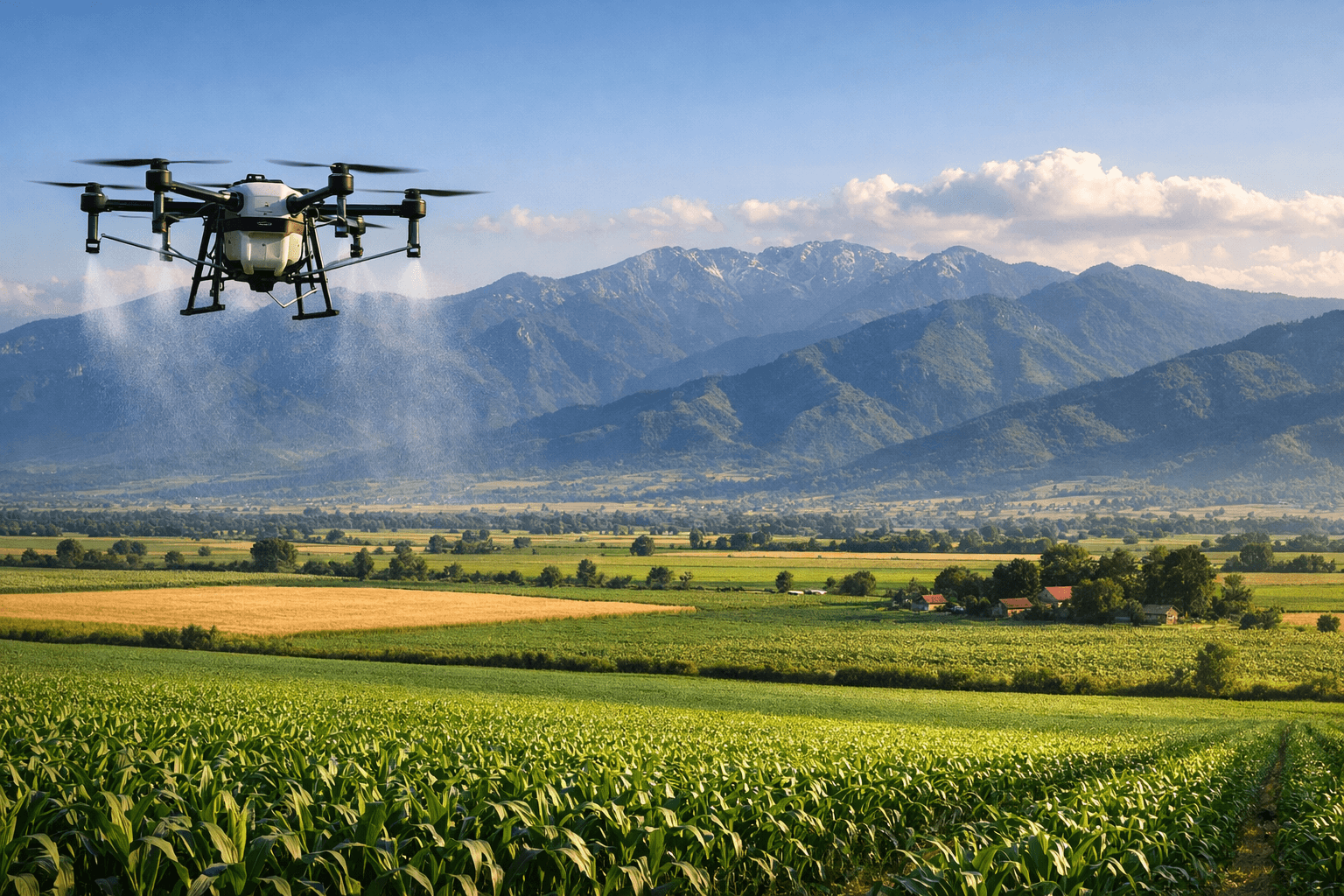
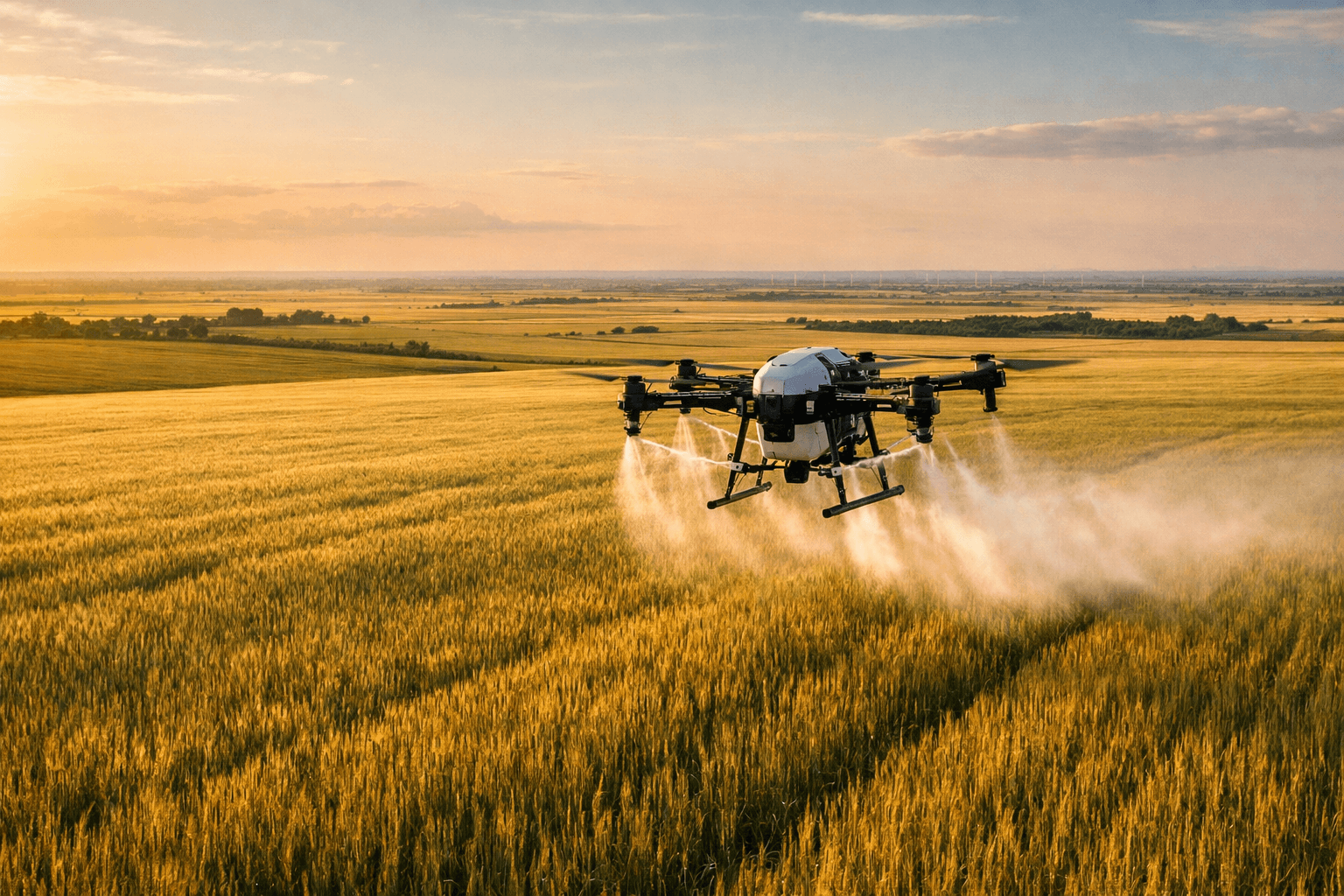
This is where drones for spraying come to the rescue. The DJI Agras T50 drone, which AirAgro uses, is able to operate regardless of soil condition, as it does not come into contact with it.
Advantages of Drone Spraying for Fungicide Treatments
Timeliness of treatment. The drone can work even when fields are wet and ground machinery cannot enter. This is critical for fungicide treatments, where the treatment window is narrow – sometimes only 2–3 days.
No soil compaction. During spring treatments the soil is often saturated with moisture. Heavy machinery leaves tracks and compacts the soil, which harms the root system. The DJI Agras T50 completely eliminates this problem.
No technology tracks. Ground sprayers require technology tracks in which the harvest is zero. With drone spraying, those 3–5% of the area that are normally lost remain productive.
Uniform coverage. Drones ensure precise and uniform application of preparation thanks to GPS navigation and automatic operating modes. The DJI Agras T50 works with ultra-high accuracy and a special flow control system that guarantees the correct dose on every square metre.
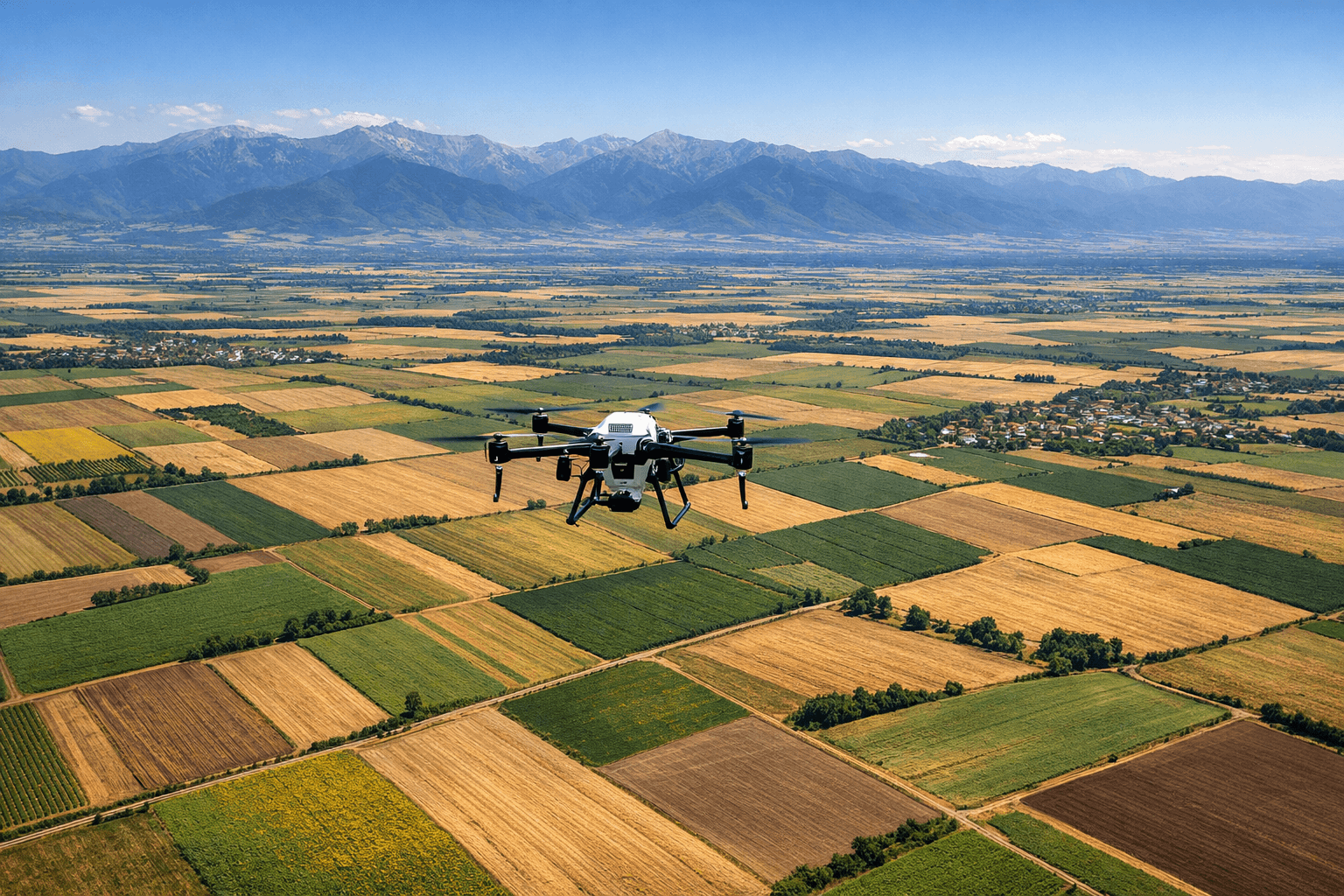
Fast work. With productivity of over 200 decares per hour, the DJI Agras T50 enables treatment of large areas within the optimal spraying window. Learn more about the effectiveness of drone spraying.
Practical Tips for Effective Fungicide Treatment
Monitor Fields Regularly
Don't apply fungicides "blindly". Crop monitoring is key – walk through the fields, check the lower leaves for septoria symptoms, watch for rust appearance. The treatment decision must be based on the real phytosanitary situation. Useful information on optimal spraying timing will help you make the right decision.
Choose the Right Products
Rotate fungicides with different mechanisms of action to prevent the development of resistance. Combine systemic and contact products. Consult an agronomist for the specific conditions in the region.
Respect Dosages
Reduced doses may seem like an economical solution, but in practice they lead to ineffective treatment and accelerate the development of resistance in pathogens. Always follow the manufacturer's recommended doses.
Consider Water Volume
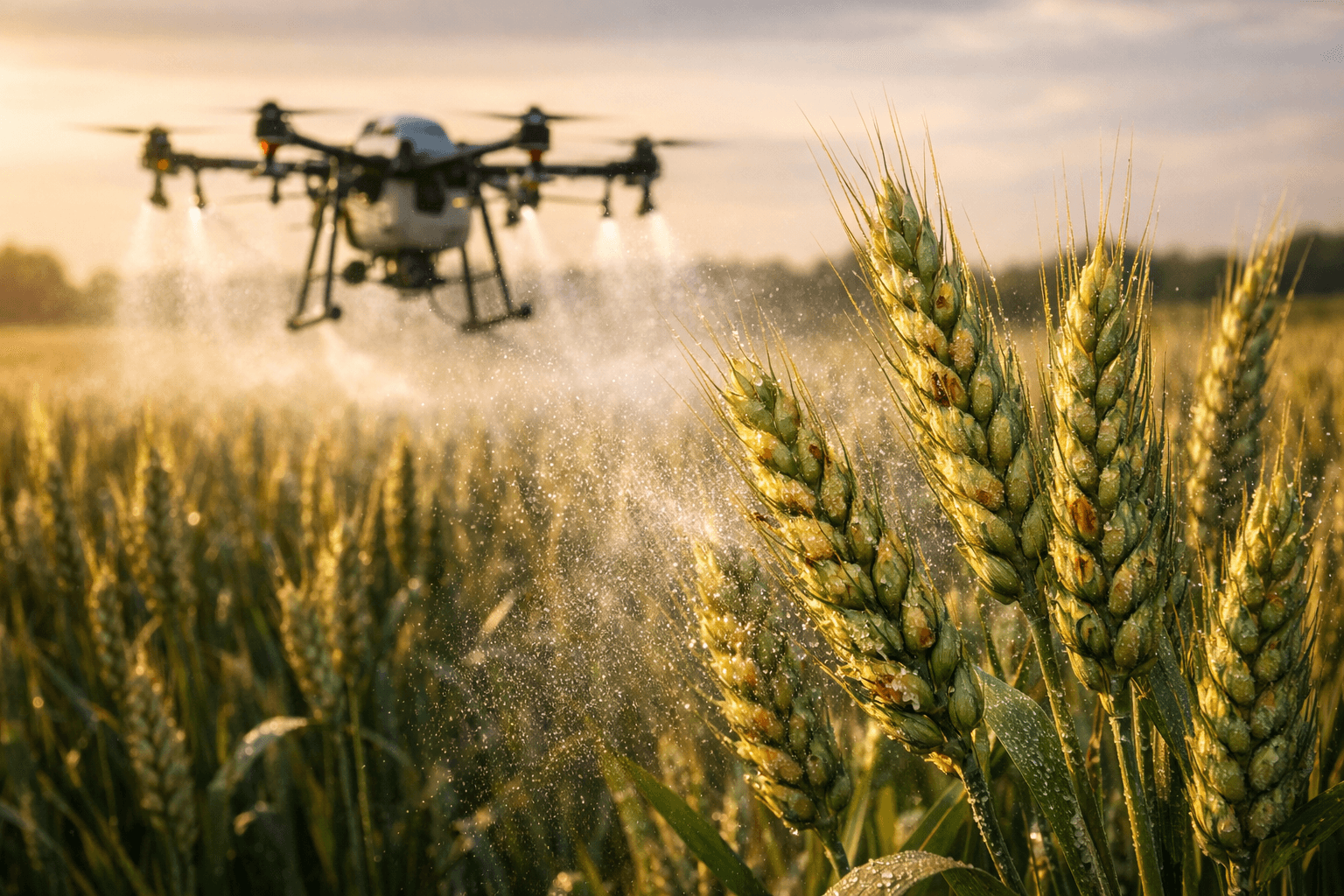
In ground spraying, the standard water volume is 200–300 L/dka. In drone treatment the water volume is much smaller – 1–2 L/dka, but the special nozzles of the DJI Agras T50 create fine droplets that provide excellent coverage. Water volume is compensated by the precision of application.
Take Meteorological Conditions into Account
Avoid spraying in wind above 4–5 m/s, in strong sun (above 25 °C) and immediately before rain. Optimal treatment hours are early morning or evening, when temperatures are lower and humidity higher.
Combining Fungicide Spraying with Other Treatments
One possibility for cost optimisation is combining fungicide spraying with other treatments. For example, at the T2 treatment foliar fertilisation with microelements or an insecticide can be added if needed. It is important, however, to check product compatibility before mixing.
When planning a comprehensive crop protection programme, it is useful to know how to control weeds in wheat too, to ensure maximum effectiveness of all treatments.
Drone or Tractor – What to Choose for Fungicide Spraying
The choice between a drone and a tractor for spraying depends on many factors. For fungicide treatments, however, the drone has a clear advantage: it can enter the field exactly when needed, without waiting for the soil to dry. For wheat, where the treatment window is critically narrow, this advantage can mean the difference between a lost and a saved yield.
Frequently Asked Questions
When is fungicide first sprayed on wheat?
The first fungicide treatment (T1) is carried out in the stem elongation phase (BBCH 31–33), usually at the beginning of April for the Thracian Plain (Plovdiv, Stara Zagora, Pazardzhik) and the middle of April for Dobrudzha. The aim is to protect the middle leaves from septoria and early rust attacks.
Which is the most important fungicide treatment for wheat?
The second treatment (T2) at the emergence of the flag leaf (BBCH 39–49) has the highest return on investment. The flag leaf provides up to 45% of photosynthesis for grain filling. Protecting it with a combined fungicide (SDHI + triazole + strobilurin) is an absolute priority.
What fungicides are recommended for wheat in Bulgaria?
For T1, triazole fungicides with contact components are used. For T2 – combined products with SDHI, triazole and/or strobilurin for broad spectrum and lasting action. For T3 (against fusarium) – tebuconazole, prothioconazole or metconazole. Rotate mechanisms of action to prevent resistance.
Can fungicide spraying be combined with foliar fertilisation?
Yes, combining fungicide with foliar fertilisation is common practice, saving time and resources. At the T2 treatment, microelements (manganese, copper, magnesium) can be added. Check product compatibility before mixing.
Why is the drone better than the tractor for fungicide spraying?
The DJI Agras T50 drone can enter the field even in wet soil – a critical advantage, since fungicides are applied precisely during wet weather. No soil compaction, no technology tracks and uniform coverage of every square metre. For farms in the Plovdiv, Haskovo, Stara Zagora and Dobrudzha areas, AirAgro ensures timely treatment within the optimal window.
Conclusion
Fungicide spraying of wheat is not an area for compromises. Correctly determining the treatment timing, choosing effective products and reliable application technology are the three pillars of successful crop protection. With the drone technology of the DJI Agras T50 you get the flexibility and precision that ground machinery is unable to provide.
📞 Request a free consultation for fungicide spraying of your wheat crops. The AirAgro team offers:
- Free farm inspection with assessment of phytosanitary condition
- Drone demonstration of the DJI Agras T50 directly on your field
- Personalised treatment plan with fungicide selection and optimal timing
We serve farms in the Thracian Plain (Plovdiv, Stara Zagora, Pazardzhik, Haskovo), Dobrudzha and all of Bulgaria. Contact us at airagro.bg or call us – don't wait for diseases to gain the upper hand, act proactively!