Rapeseed Spraying with Drone – Optimal Crop Protection
Rapeseed is one of the fastest-growing crops in Bulgarian agriculture. With areas reaching over 200,000 hectares in recent years, it is an important source of income for agricultural producers and a raw material for the oil and biofuel industry. Growing rapeseed, however, requires careful and timely plant protection, as the crop is susceptible to many diseases and pests.
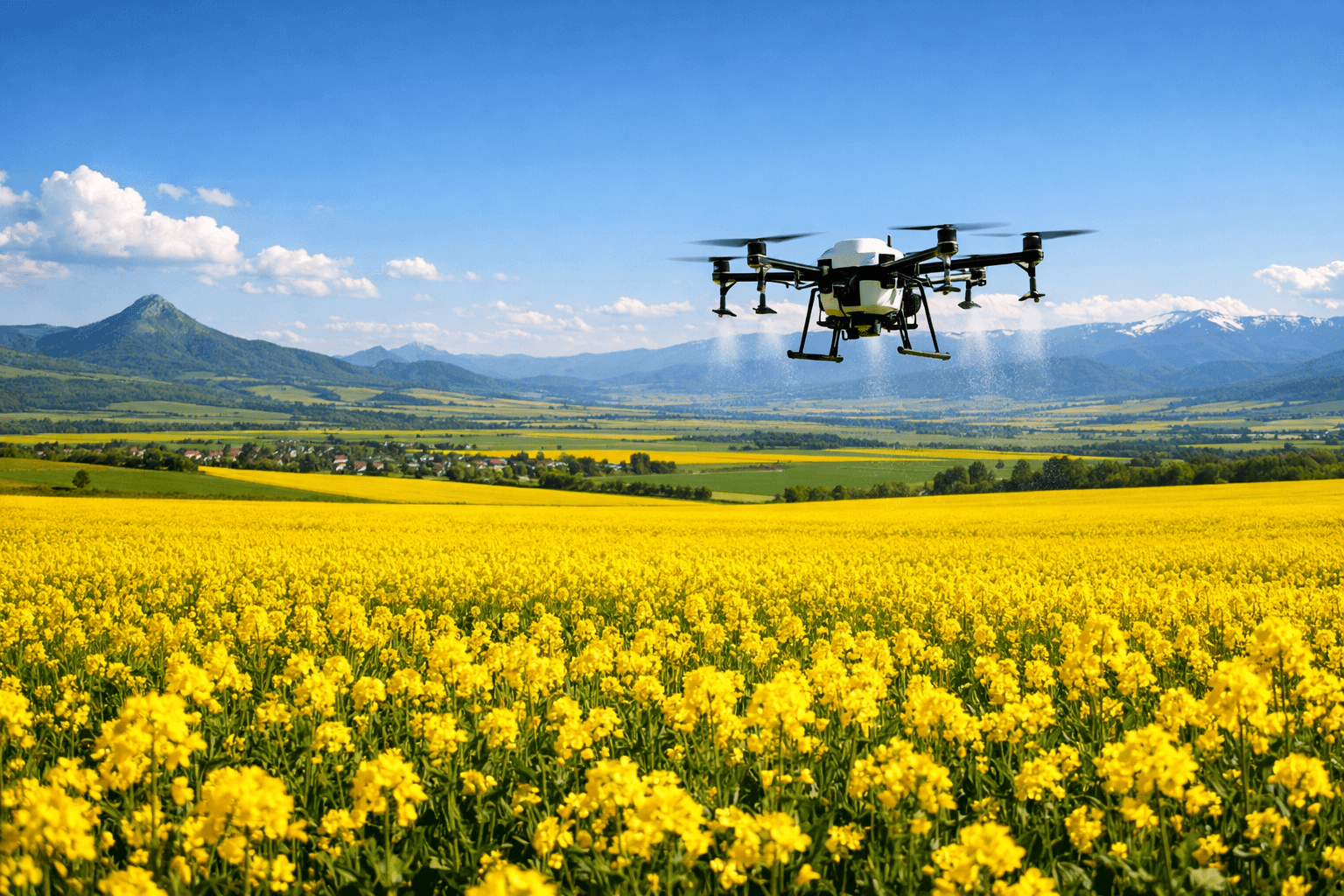
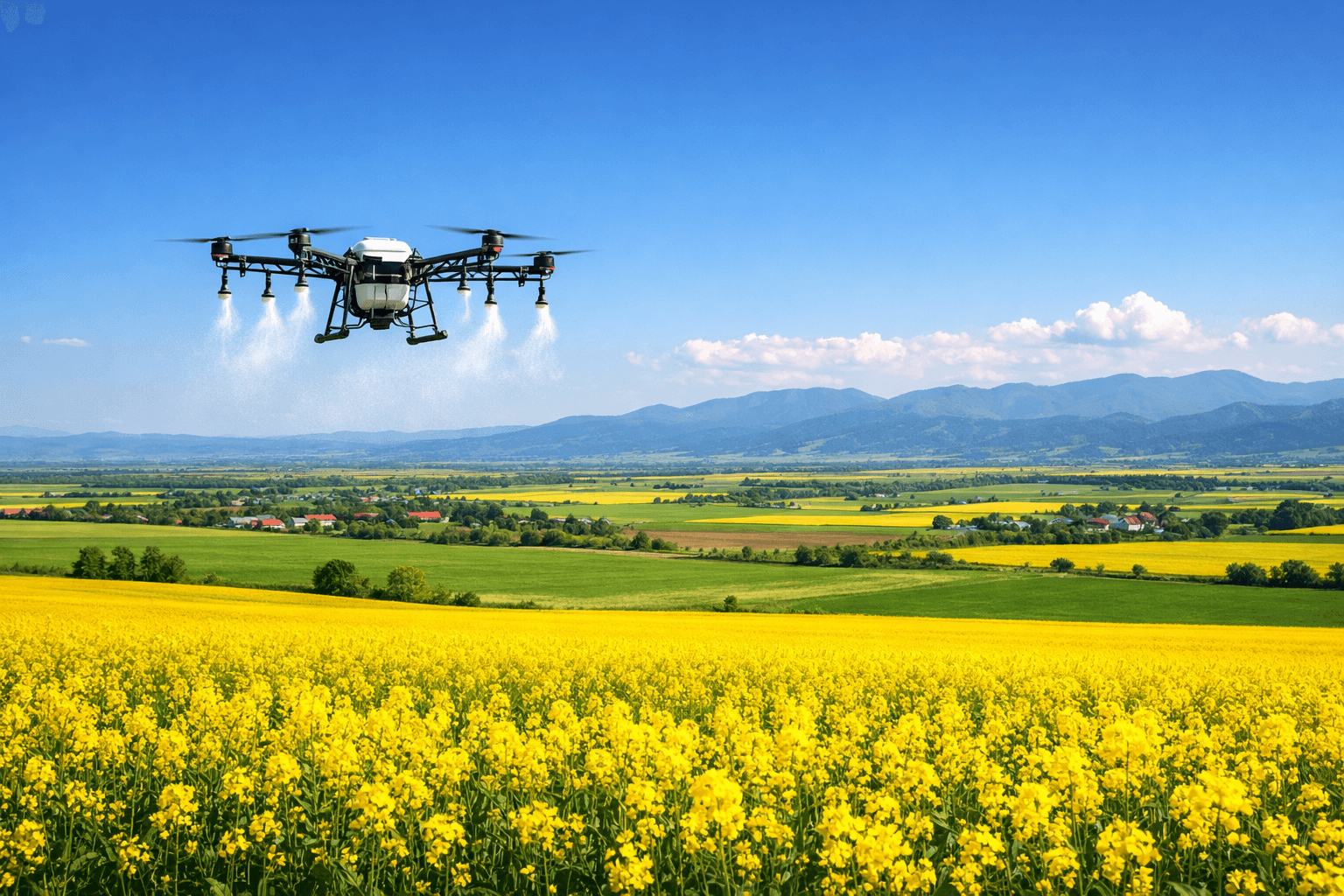
Rapeseed spraying with a drone offers a modern solution combining precision, speed and a gentle approach to crops. In this article we will look at how drone technology can optimise crop protection of rapeseed fields.
Rapeseed in Bulgaria – Significance and Challenges
Rapeseed is a winter crop, sown in autumn and harvested the following summer. It is preferred by many farmers for its good purchase price and its role as an excellent predecessor for wheat.
The main rapeseed growing regions in Bulgaria include Dobrudzha, Ludogorie, the Danubian Plain and parts of the Thracian Plain. AirAgro serves rapeseed farms in all leading regions – from Dobrudzha through Plovdiv, Stara Zagora and Pazardzhik to Haskovo and the Thracian Plain. The climatic conditions in these regions are suitable, but also create conditions for the development of diseases and pests.
Main Challenges
- Autumn and spring diseases – rapeseed is vulnerable at various stages of development
- Pests – rapeseed flea beetle, stem weevil, pollen beetle
- Weeds – competition especially in early phases
- Lodging – growth regulators needed with excessive vigour
When to Spray Rapeseed – Key Moments
Learn more about optimal timings in our detailed article on when to spray rapeseed. Here we present the main periods:
Autumn Treatment (October – November)
Herbicide Spraying
Weed control is critical in the early development stage of rapeseed. Autumn herbicide treatment ensures a clean field, allowing rapeseed to develop a strong rosette before winter.
With a drone the treatment is performed quickly and effectively. Especially valuable is that the drone can work in wet autumn conditions when heavy machinery risks soil compaction or getting bogged down.
Insecticide Treatment against Rapeseed Flea Beetle
The rapeseed flea beetle is one of the most dangerous pests in the autumn period. In mass attack the larvae can destroy a significant portion of young plants. Fast response is crucial, and drone spraying enables treatment within hours of detecting an attack.
Fungicide Treatment
Autumn fungicide spraying is important for preventing Phoma and other fungal diseases. Simultaneously with the fungicidal effect, some products also act as growth regulators, stimulating rapeseed to develop a stronger root system.
Spring Treatment (March – May)
Early Spring Treatment
With the start of vegetation in March, rapeseed actively resumes development. This is the moment for:
- Fungicide treatment against Phoma and Sclerotinia
- Insecticide treatment against stem weevil
- Foliar feeding with boron and other microelements
Spring in Bulgaria is often rainy and fields may be difficult to access with ground machinery. The drone provides timely treatment regardless of soil condition.
Treatment During Budding
The budding phase is critical for yield formation. In this period fungicide treatment against Sclerotinia is mandatory – the most dangerous rapeseed disease. Sclerotinia can cause yield losses up to 30–50%.
The DJI Agras T50 provides precise application of fungicide over the entire above-ground mass of rapeseed. Fine droplet dispersion and the airflow from the rotors help achieve better coverage.
Treatment During Flowering
During flowering the main threat is the pollen beetle, which can destroy a significant portion of flowers. Insecticide treatment in this phase must be precise so as not to harm pollinators. The drone enables targeted treatment at specific times of day when bees are not active.
Advantages of Rapeseed Spraying with a Drone
Timeliness of Treatment
Rapeseed requires treatments at precisely defined development stages. A delay of even a few days can significantly reduce preparation effectiveness. The drone enables fast response – it does not depend on field accessibility and can work under conditions when tractors cannot.
Minimal Mechanical Impact
Rapeseed is a crop with fragile stalks, especially in advanced phases. Ground machinery inevitably tramples and breaks plants. With drone spraying there is absolutely no contact with the crop.
Precise Dosing and Coverage
The GPS navigation of the DJI Agras T50 guarantees uniform coverage without gaps and overlap. Every part of the field receives the exact dose of preparation, which is key for treatment effectiveness.
Gentle Approach to Pollinators
With drone spraying it is easier to control the exact time of treatment. Spraying early in the morning (before bee activity) is easily achievable and reduces risk to pollinators.
Resource Savings
The drone works with Ultra Low Volume (1–2 L/dka), meaning significantly less water consumption. Precise application also reduces preparation consumption by 10–15% compared to ground spraying.
For more information see our article on the benefits of drones in agriculture.
Rapeseed Diseases and Protection with a Drone
Sclerotinia (White Rot)
Sclerotinia is the most dangerous rapeseed disease in Bulgaria. The fungus attacks stalks, causing whitish rot and premature ripening of plants. Losses can reach 50%.
Prophylactic fungicide spraying in the budding and early flowering phase is key. The drone provides effective coverage of stalks and leaves, which is decisive for fungicide effectiveness.
Phoma (Phoma lingam)
Phoma attacks the base of the stalk and root collar. Autumn fungicide treatment is the main control method. With drone spraying, fungicide reaches the base of plants thanks to the airflow generated by the rotors.
Alternaria and Light Leaf Spot
These diseases affect pods and can cause early splitting. Fungicide treatment at the end of flowering significantly reduces the risk.
Practical Tips for Rapeseed Growers
Plan Treatments in Advance
Rapeseed typically requires 4–6 treatments per year (2–3 autumn and 2–3 spring). Plan them in advance to ensure timely protection.
Monitor Pests
Use yellow water traps to monitor rapeseed flea beetle, stem weevil and pollen beetle. When economic thresholds are reached, contact AirAgro immediately for rapid treatment.
Time Windows for Spraying
Optimal conditions for rapeseed drone spraying are:
- Temperature: 10–25°C
- Wind: up to 3–4 m/s
- No rain in the next 2–3 hours
- Prefer early morning or evening hours
Combining Preparations
In spring treatments it is effective to combine fungicide + insecticide + foliar fertilizer (boron) in one pass. Consult the AirAgro team for appropriate combinations.
Price of Rapeseed Drone Spraying
For current price information see drone spraying prices. Price depends on area, number of treatments and location.
With rapeseed, the value of drone spraying returns many times over – timely protection prevents losses that far exceed the service cost.
Drone Technology for Crop Protection
Modern agricultural drones like the DJI Agras T50 are specialised for drone crop protection of different crops. With a 40-litre tank, centrifugal nozzles for precise distribution and RTK GPS system for centimetre accuracy, the T50 is the ideal tool for protecting rapeseed crops.
Frequently Asked Questions
How many times per year must rapeseed be sprayed?
Rapeseed typically requires 4–6 treatments: 2–3 autumn (herbicide, insecticide, fungicide) and 2–3 spring (fungicide, insecticide, foliar fertilizer). The exact number depends on the phytosanitary situation.
Can the drone spray rapeseed at low temperatures in autumn?
Yes. The DJI Agras T50 can work at temperatures from 0°C to 45°C. It is important that the preparation itself is suitable for application at the specific temperature.
How do I know my rapeseed needs treatment?
Regular field inspection is key. Observe for signs of diseases (spots on leaves, drying out) and pests (leaf damage, presence of insects). When in doubt, contact AirAgro for a consultation.
Request a Free Consultation for Rapeseed Drone Spraying
Rapeseed requires 4–6 treatments per year – do not risk your harvest with delays. Plan protection in advance with AirAgro!
What we offer to rapeseed growers:
- Free consultation and farm inspection – our agronomist will visit your rapeseed fields and assess the condition of crops
- Seasonal treatment plan – a detailed schedule of autumn and spring treatments tailored to development phases
- Drone demonstration of the DJI Agras T50 – see how the drone works in wet autumn or softened spring conditions when the tractor cannot enter the field
- Fast response against rapeseed flea beetle – in mass attack we respond within 24–48 hours
We serve rapeseed farms in Dobrudzha, the Thracian Plain, Plovdiv, Stara Zagora, Pazardzhik, Haskovo and throughout the country.
Contact us:
- 📞 Call us at +359 884 242 406 for a free consultation
- 🌐 Visit airagro.bg and request a farm inspection
- 📋 Request drone spraying services for your rapeseed
The first step is free – call and request a consultation and farm inspection. Together we will prepare a treatment plan that will protect your rapeseed from autumn through to harvest!