How Agricultural Drones Are Used in Bulgaria
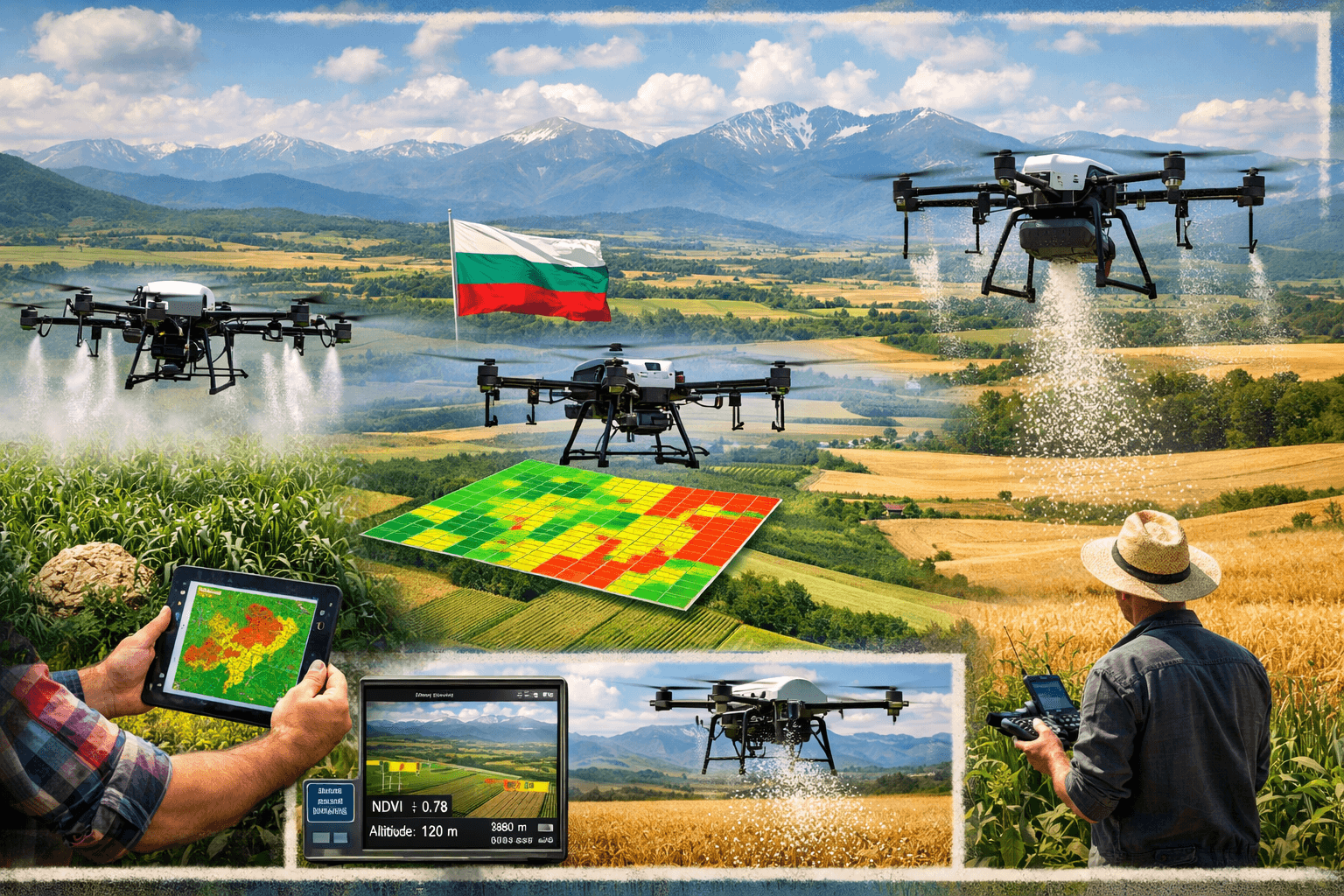
The use of agricultural drones in Bulgaria has been growing steadily since 2020. Although the country started later than Western Europe and Asia, today an increasing number of Bulgarian farmers are discovering the benefits of this technology. In this article we will look at exactly how agricultural drones are used in Bulgaria – from specific applications and the regulatory framework, to regional specifics and future perspectives.
The Adoption of Agricultural Drones in Bulgaria
Timeline of Development
- 2017–2019: First tests and demonstrations of agricultural drones in Bulgaria. Mainly importers and technology enthusiasts.
- 2020–2022: Growing interest from larger farms. The first companies offering drone spraying services appear.
- 2023–2025: Accelerated technology adoption. The DJI Agras series (including the DJI Agras T50) establishes itself as standard. The regulatory framework becomes clearer.
- 2026: Drones become a regular part of the toolkit of modern farms in key agricultural regions.
Today dozens of teams and companies offering agricultural drone services operate in Bulgaria, with treated areas growing every season.
Main Applications of Agricultural Drones
1. Spraying with Plant Protection Products
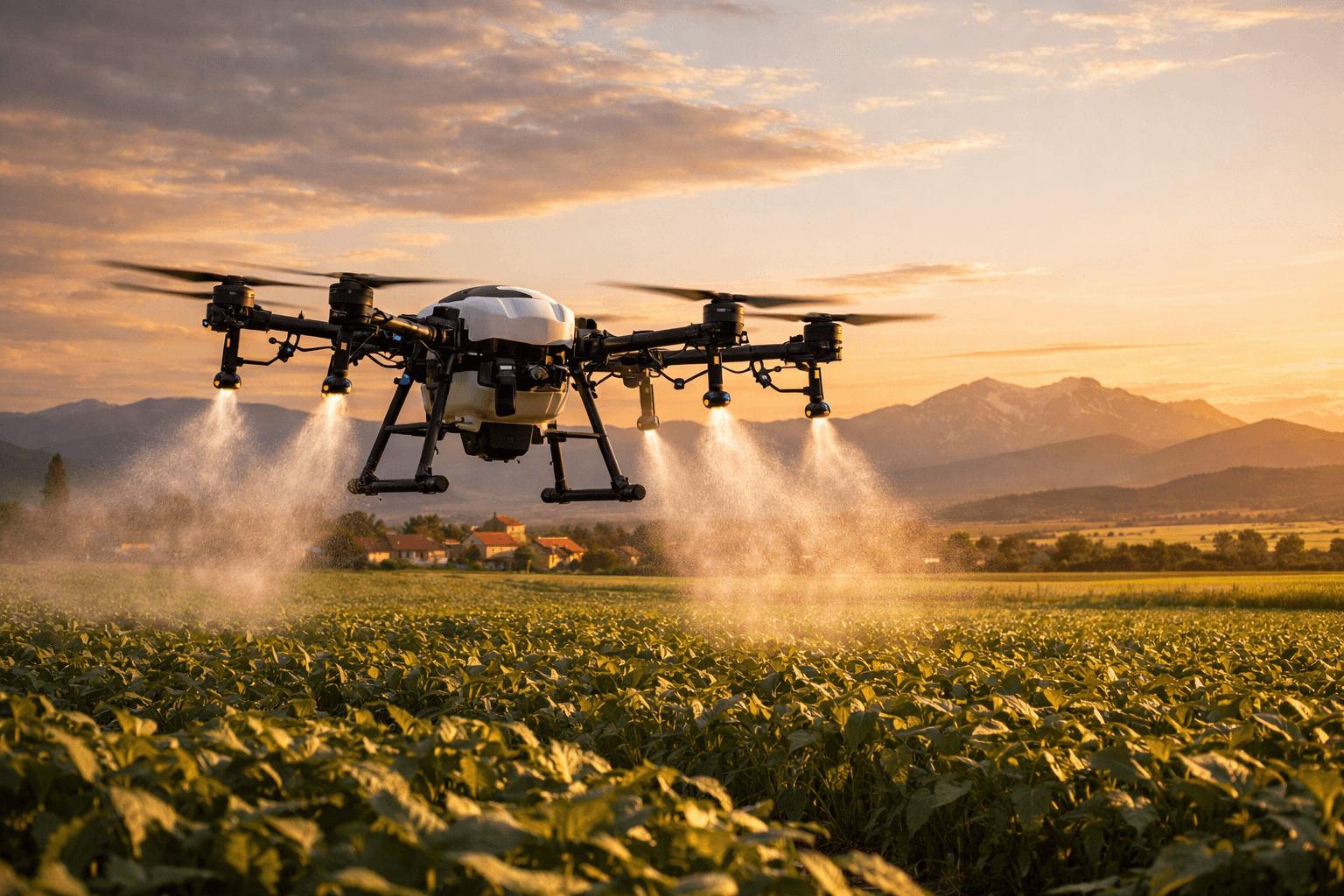
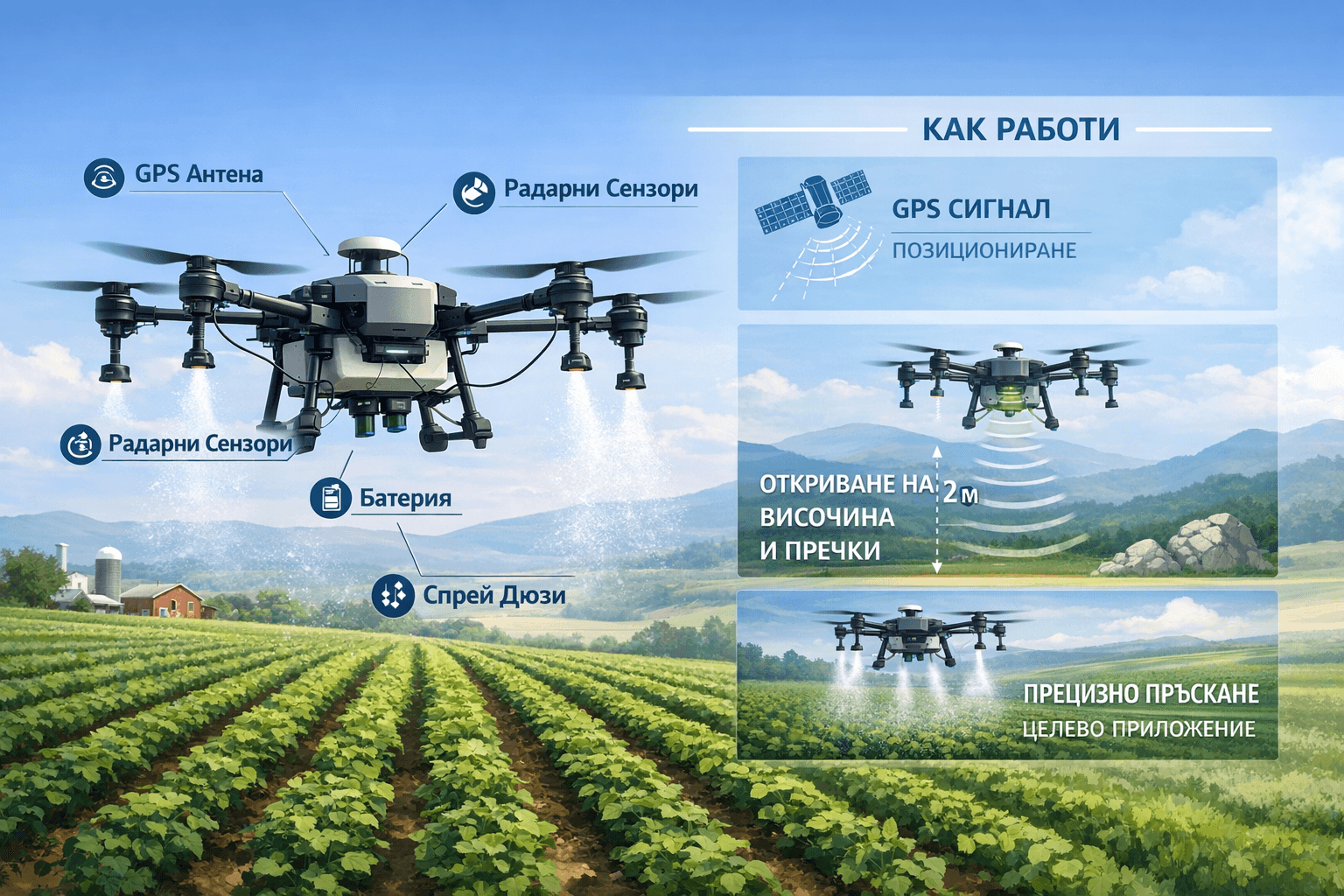
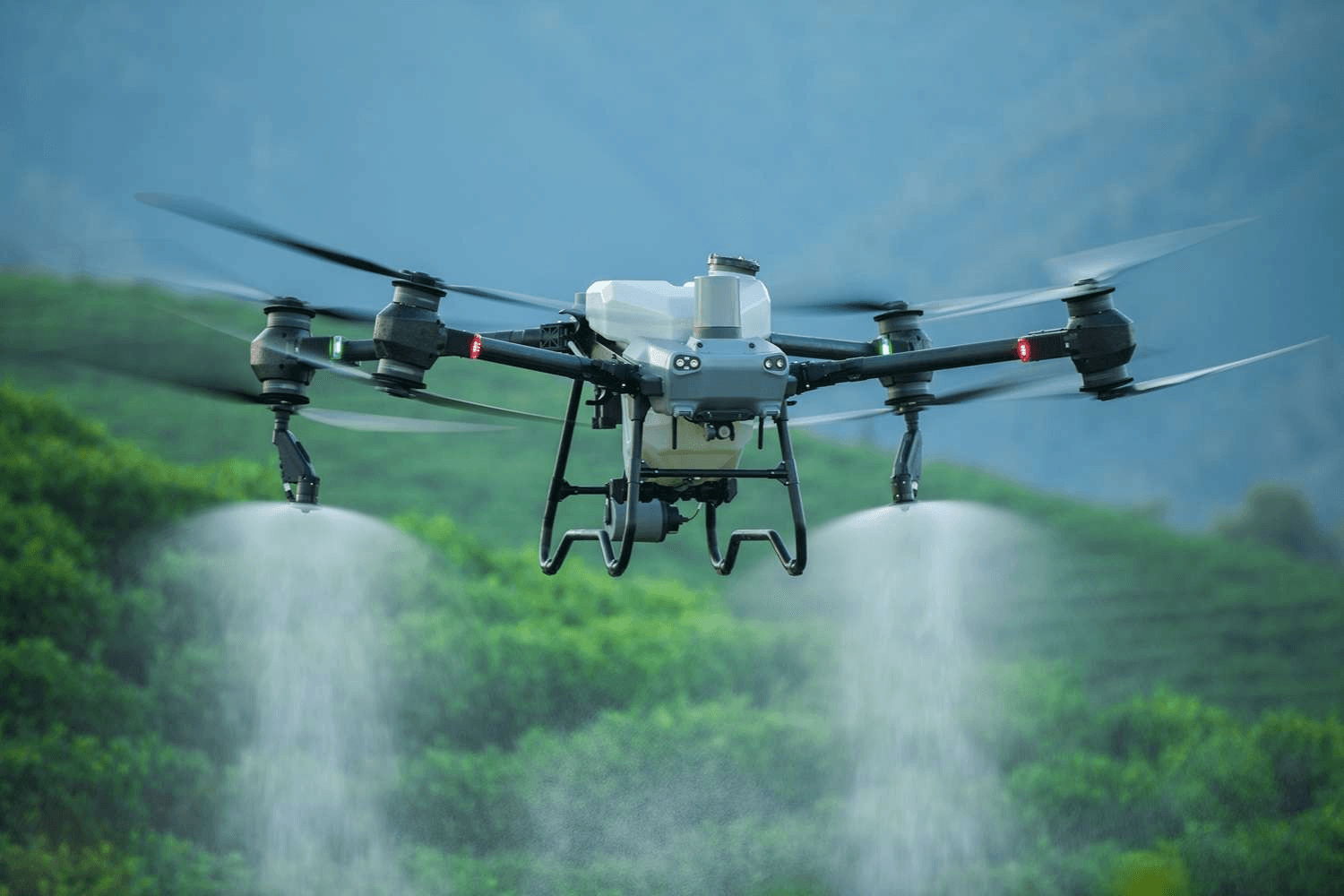
This is the most widespread application of agricultural drones in Bulgaria. The DJI Agras T50 is equipped with a 40-litre tank and centrifugal nozzles that provide precise application of:
- Herbicides – weed control in wheat, corn, sunflower
- Fungicides – treatment against fungal diseases (powdery mildew, rusts, fusarium)
- Insecticides – pest control (grain bug, aphids, European corn borer)
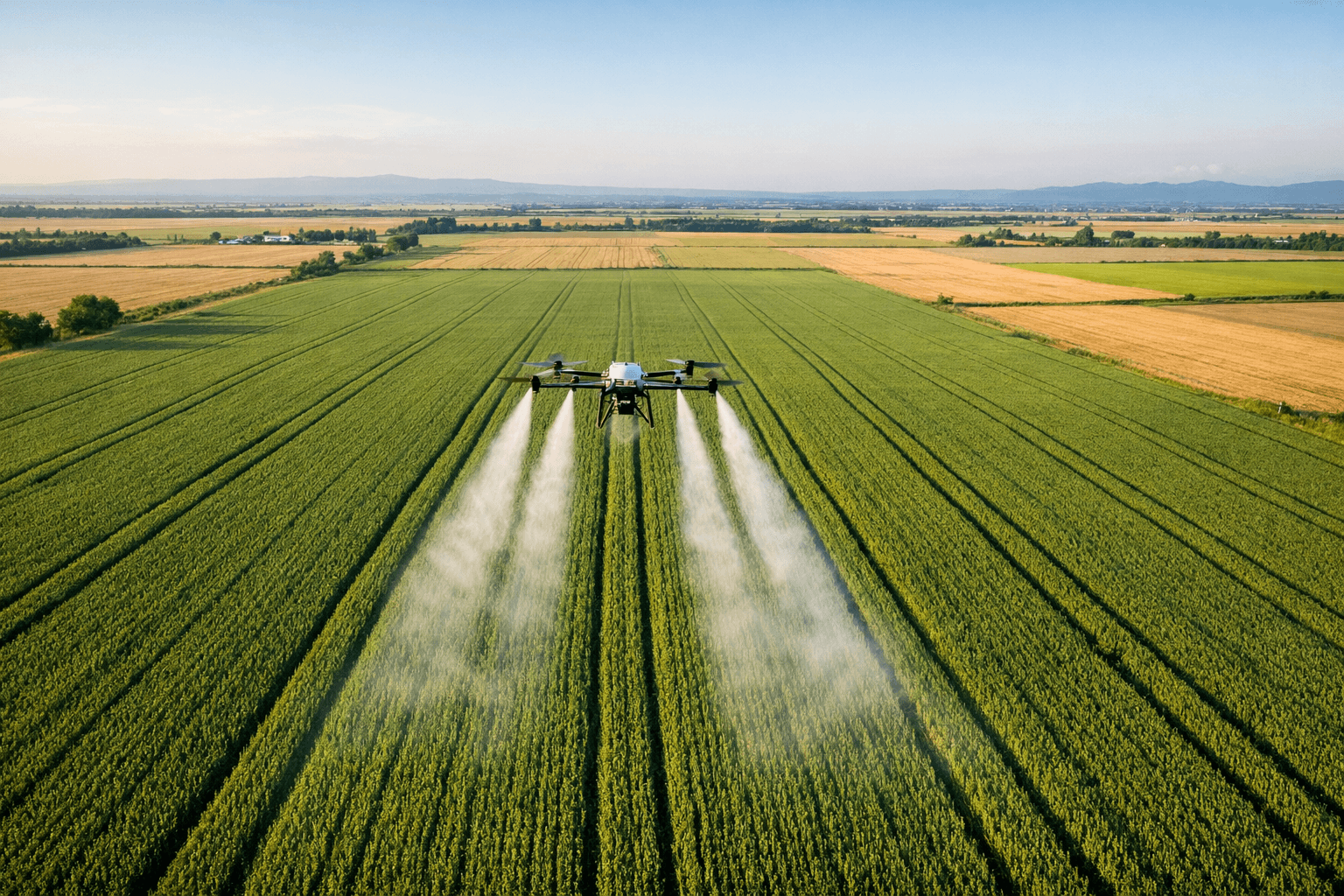
The drone works at ultra-low spraying rates (1–2 L/dka instead of 20–40 L/dka with a tractor), reducing water and preparation consumption by 20–30%.
2. Foliar Fertilisation
The second most popular application is foliar feeding with liquid fertilisers. The drone applies solutions of:
- Urea (46% nitrogen) for feeding winter cereals
- Microelements (Fe, Mn, Zn, Cu, B) to correct deficiencies
- Humate and amino acid stimulants for increasing stress resistance
Foliar fertilisation with a drone is especially effective for crops in the grain-filling phase, when the tractor cannot enter the field without trampling the stand.
3. Crop Monitoring and Observation
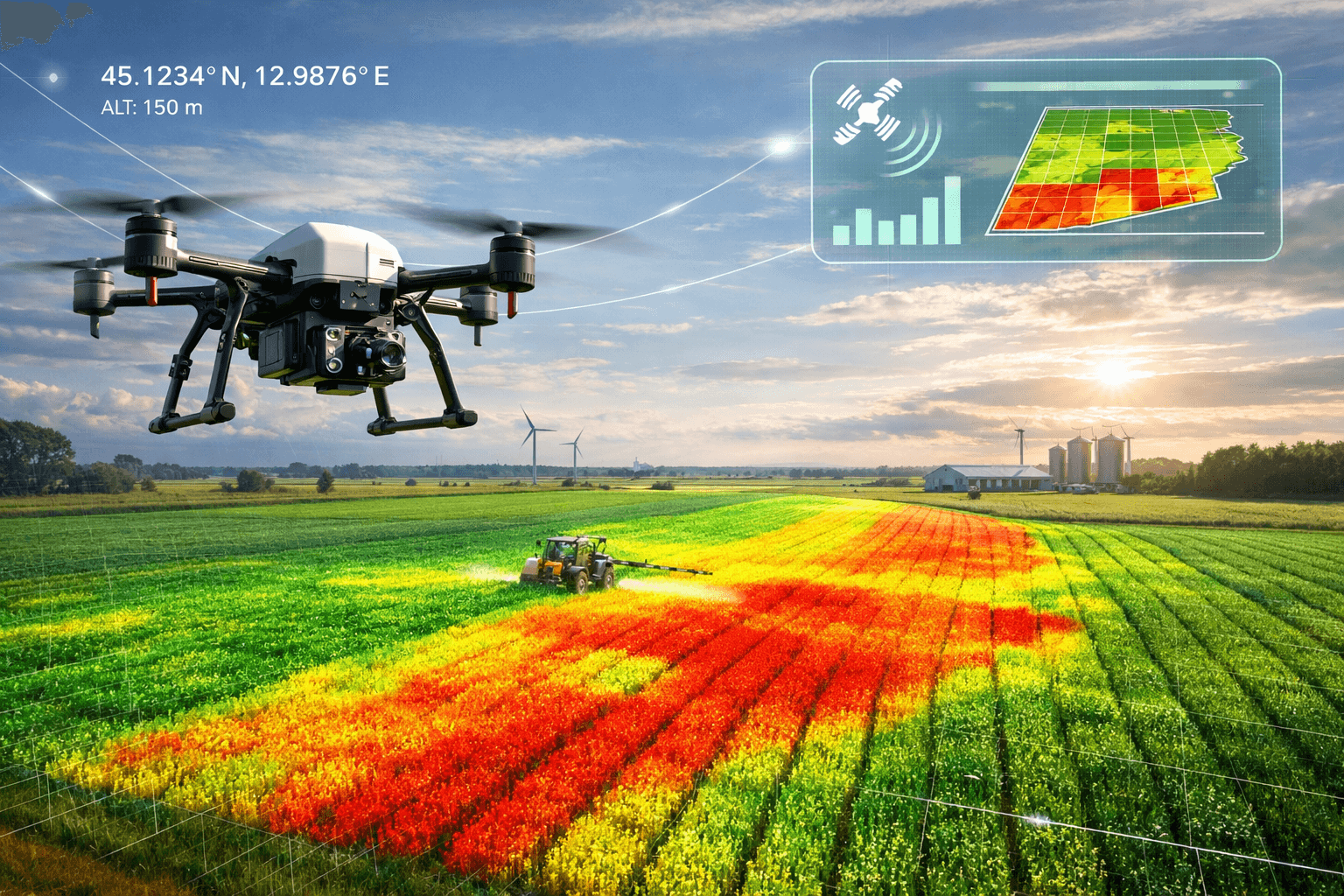
Drones with cameras (RGB and multispectral) are used for:
- Emergence assessment – quickly determining the germination percentage after sowing
- Identification of stress zones – through NDVI analysis
- Weed detection – locating weed patches for spot treatment
- Irrigation monitoring – for irrigated crops
This information is key for making timely decisions and is the foundation of precision agriculture.
4. Mapping and 3D Model Creation
Specialised drones create:
- Orthophoto maps – accurate georeferenced images of fields
- Terrain relief maps – for drainage and irrigation planning
- Vegetation cover maps – for VRA (variable rate application)
These maps are used for long-term planning and farm optimisation.
Regulatory Framework in Bulgaria
The use of agricultural drones in Bulgaria is subject to regulation by several institutions.
General Directorate "Civil Aviation Administration" (GD CAA)
GD CAA is the main regulator for Unmanned Aircraft Systems (UAS) in Bulgaria. Since 2021 the country has applied Regulation (EU) 2019/947 of EASA (European Union Aviation Safety Agency).
Key requirements:
- Operator registration – every drone operator must register with GD CAA
- Competency certificate – passing a theoretical examination is required
- Operation category – agricultural spraying falls in the specific category, requiring operational authorisation
- Insurance – mandatory third-party liability insurance
EASA Regulations
As an EU member, Bulgaria applies the unified European drone rules:
- Open Category – for small drones with low risk (up to 25 kg)
- Specific Category – for higher-risk operations, including agricultural spraying with the DJI Agras T50
- Certified Category – for the highest-risk operations
Agricultural spraying requires approval under SORA methodology (Specific Operations Risk Assessment) or work under a standard scenario.
BFSA – Plant Protection Licence
The Bulgarian Food Safety Agency (BFSA) regulates the use of plant protection products. Requirements:
- Certificate of competence – for applying PPP (plant protection products)
- Plant protection diary – mandatory documentation of every treatment
- Compliance with waiting periods – minimum period from treatment to harvest
- Notifying beekeepers – mandatory notification of registered beekeepers in the area
Every company offering drone spraying services must hold the corresponding licences and certificates.
Regional Specifics
Thracian Plain
Thrace is one of the most active regions for agricultural drone use. The reasons:
- Variety of crops – cereals, oilseeds, vegetables, vineyards, orchards
- Vineyards and orchards – where the drone is considerably more effective than the tractor
- Hilly terrain – many sloped fields where tractors have difficulty
- Intensive agriculture – higher product value justifies the investment
Dobrudzha
Dobrudzha, Bulgaria's breadbasket, is characterised by:
- Large blocks – fields of 500–5,000+ decares
- Mainly cereals and oilseeds – wheat, corn, sunflower, rapeseed
- Flat terrain – ideal for autonomous drone flight
- Growing interest – especially for fungicide treatments of wheat when tractors cannot enter
Danubian Plain
The Danubian Plain offers:
- Medium-sized farms – 200–2,000 dka
- Mixed farming – cereals, technical and vegetable crops
- Irrigated agriculture – drones are effective for irrigation monitoring
- Proximity to the Danube – increased ecological requirements, which favours drones due to fewer chemicals
Challenges to Mass Adoption
Insufficient Awareness
Many farmers still do not have a clear picture of the capabilities of agricultural drones. Myths exist such as:
- "The drone is a toy, it cannot replace the tractor" – not true, the DJI Agras T50 is an industrial machine
- "It is too expensive" – when hiring a service, the price is competitive with tractor spraying
- "It doesn't work in our conditions" – the drone works at temperatures from -10°C to +45°C and winds up to 6 m/s
Initial Investment
Purchasing your own drone requires a significant investment (over 100,000 BGN for a full DJI Agras T50 kit). The solution is:
- Hiring a service – no initial cost, you pay only per decare
- Cooperative purchase – several farms share a drone
- CAP subsidies – covering up to 50–70% of the investment
Regulatory Complexity
Although the framework is clear, the process of obtaining permits takes time. This is why most farmers prefer to hire licensed operators rather than entering the regulatory process themselves.
Examples of Successful Application
Wheat in Dobrudzha
A farm of 3,000 dka of wheat in the Generals Toshevo area has switched to drone spraying for fungicide treatments. Results after the first season:
- 25% less preparation thanks to precision application
- Zero trampling losses – compared to 3–4% loss with a tractor
- Faster treatment – the entire area treated in 6 working days instead of 10
Vineyard in Thrace
A 200 dka vineyard farm near Plovdiv uses a drone for:
- Fungicide spraying against downy mildew and powdery mildew every 7–14 days
- Foliar fertilisation with microelements
- Result: 30% less preparations and considerably better grape coverage compared to hand spraying
Sunflower in Dobrudzha
A farm of 2,000 dka of sunflower uses a drone for insecticide treatment. The drone's advantages are especially visible with tall crops, where the tractor causes significant damage.
Opportunities and Future Perspectives
European Green Deal
The European Green Deal sets ambitious targets for agriculture by 2030:
- 50% reduction in the use of chemical pesticides
- 20% reduction in fertiliser use
- 25% of agricultural land – organic farming
Agricultural drones are a key instrument for achieving these goals, as they reduce preparation and fertiliser consumption by 20–30%.
CAP 2023–2027 Subsidies
The new CAP offers financial incentives for:
- Investments in precision technologies (drones, GPS, sensors)
- Eco-schemes for reduced pesticide use
- Support for young farmers investing in innovations
Technological Development
In the coming years we expect:
- Fully autonomous operations – without the need for an operator in the field
- AI-based spot spraying – the drone recognises weeds and pests and sprays only the affected plants
- Drone swarms – multiple drones working in coordination on one field
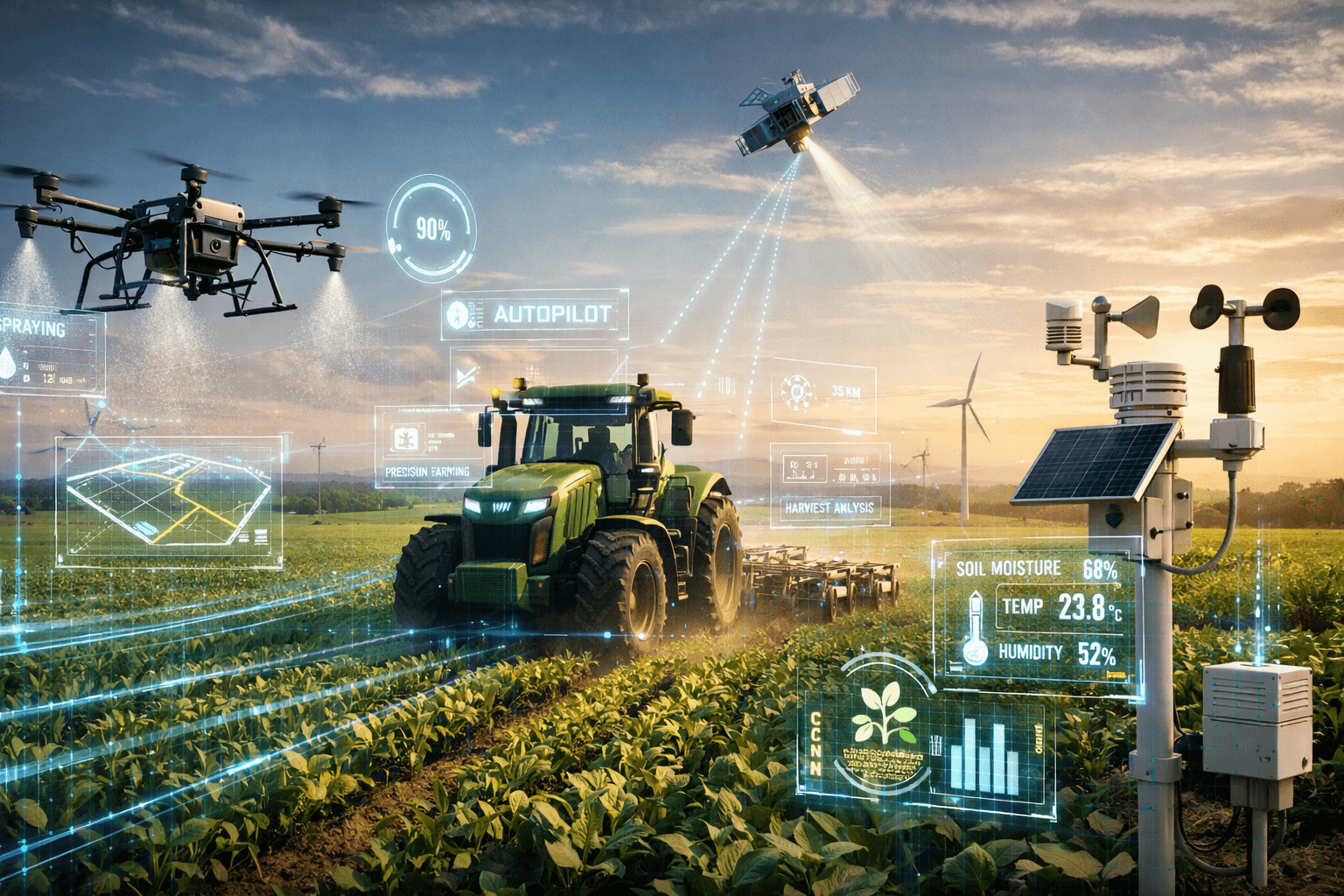
- IoT integration – the drone communicates with soil sensors and weather stations in real time
How to Get Started with Agricultural Drones
If you are a farmer in Bulgaria and want to try an agricultural drone, here is the easiest way:
- Contact a licensed operator – such as AirAgro
- Discuss your needs – crops, areas, problems
- Arrange a test spraying – often the first demonstration is free
- Evaluate the results – coverage quality, speed, convenience
- Plan the season – arrange sprayings for key phases
Frequently Asked Questions
What are drones used for in agriculture?
Drones are used for spraying with herbicides, fungicides and insecticides, foliar fertilisation with liquid fertilisers, monitoring crops with multispectral cameras, mapping fields and creating NDVI maps. The most widespread application in Bulgaria is drone spraying of cereals, oilseeds, vineyards and orchards.
Is a licence required for spraying with an agricultural drone?
Yes. The operator must hold GD CAA registration, a competency certificate under Regulation (EU) 2019/947, operational authorisation for the specific category and a BFSA certificate for applying plant protection products. As a client you do not need a licence – AirAgro holds all necessary permits.
Is drone spraying financially worthwhile?
Yes. Drones reduce preparation consumption by 20–30%, eliminate trampling losses (3–5% of the harvest) and reduce total crop protection costs. When hiring a service, the price per decare is competitive with tractor spraying, without any initial investment on your part.
How long does it take to learn to operate an agricultural drone?
Professional training for a DJI Agras T50 operator takes 2–4 weeks – including theoretical preparation, practical work and licensing examinations. But if you are a farmer, you do not need to train – simply hire a licensed operator like AirAgro and focus on your farm.
Can drones be used year-round in agriculture?
Yes. In spring and summer drones are used intensively for spraying and fertilisation. In autumn – for treatment of winter crops. In winter – for monitoring winter crops and season planning. DJI Agras T50 works at temperatures from -10°C to +45°C.
Conclusion
How are agricultural drones used in Bulgaria? The answer is – increasingly widely and increasingly successfully. From spraying and fertilisation, through monitoring and mapping, drones are transforming Bulgarian agriculture. The regulatory framework is in place, the technology is proven, and the benefits for farmers are measurable.
Bulgaria has a unique opportunity to take advantage of this technology – with the support of EU subsidies, suitable climatic and geographical conditions and a growing network of professional operators.
Ready to try an agricultural drone on your field? The AirAgro team operates with the DJI Agras T50 throughout Bulgaria – from Dobrudzha to Thrace, including Plovdiv, Stara Zagora, Pazardzhik and Haskovo. We offer professional drone spraying at competitive prices, with full documentation and licences.
🚁 Request a free consultation and farm inspection – we will prepare a personal treatment plan and arrange a drone demonstration directly on your field. The first demonstration is free!
📞 Call today or write to airagro.bg for a free quote!