Cover Crop Seeding with Drone – the Future of Regenerative Agriculture
Years of intensive cultivation leave the soil vulnerable – erosion, loss of organic matter and leaching of nutrients. Cover crop seeding with a drone combines regenerative agriculture and precision aerial technology to restore soil health without disrupting the production cycle.
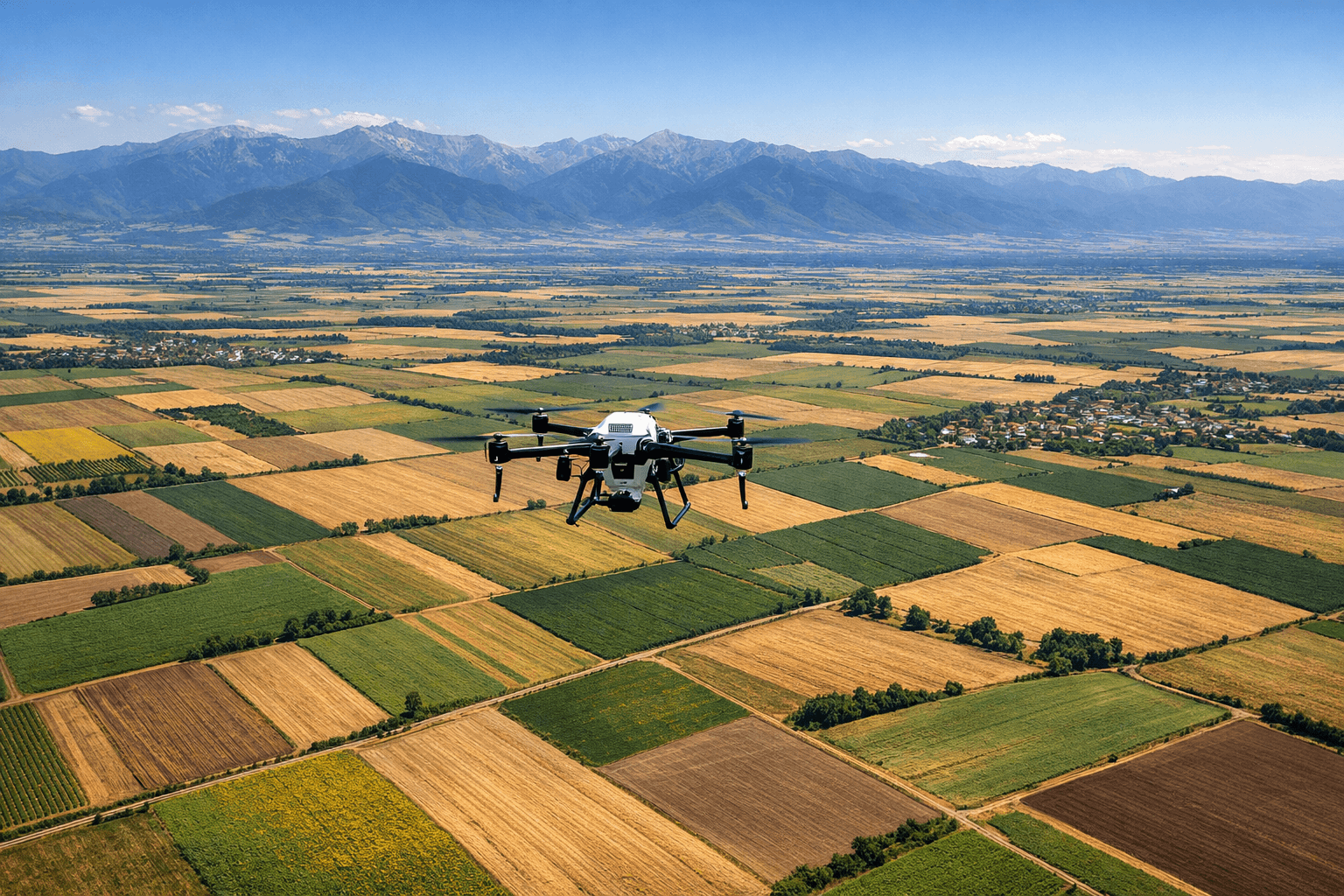
AirAgro provides this service using the DJI Agras T50 for farms in Plovdiv, Stara Zagora, Pazardzhik, Haskovo, Dobrudzha and the entire Thracian Plain.
What Cover Crops Are and Why They Matter
Cover crops are plants sown not for harvest but for soil protection and improvement between two main crops. They perform several critical functions simultaneously:
Erosion Protection
Bare soil after harvest is exposed to water and wind erosion. In the Thracian Plain and Dobrudzha, losses reach 2–5 tonnes of soil per decare per year. Cover crops reduce erosion by up to 90% by anchoring soil particles with their root systems.
Nitrogen Fixation
Legume cover crops (vetch, field peas, clover) live in symbiosis with nitrogen-fixing bacteria of the genus Rhizobium, converting atmospheric nitrogen (N₂) into an accessible form. A well-developed vetch crop fixes 8–14 kg of nitrogen per decare – the equivalent of 25–40 kg of ammonium nitrate.
Weed Suppression
The dense cover crop competes with weeds for light, water and nutrients. Mustard, for example, releases allelopathic substances (glucosinolates) that suppress germination of weed seeds. This reduces the need for herbicide spraying in the following season.
Cover Crop Species for Bulgarian Conditions
The choice of cover crop depends on the main crop, soil type and objective. Here are the most suitable species for farms in Plovdiv, Stara Zagora, Pazardzhik and Haskovo:
Legumes (Nitrogen-Fixing)
- Vetch (Vicia sativa) – the most popular cover crop in Bulgaria. Seeding rate: 8–12 kg/decare. Fixes nitrogen and forms a powerful root system that loosens the soil.
- Field pea (Pisum sativum) – fast-growing, suitable for mixes. Rate: 10–15 kg/decare.
- Clover (Trifolium spp.) – perennial, suitable for inter-rows in orchards and vineyards. Rate: 1.5–2.5 kg/decare.
Cereals (Structure-Building)
- Rye (Secale cereale) – one of the most resilient cover crops; takes well even when sown at the end of summer. The powerful root system improves the structure of heavy clay soils. Rate: 8–12 kg/decare.
- Triticale – a wheat-rye hybrid, suitable for richer soils. Rate: 10–14 kg/decare.
Crucifers (Bio-Fumigants)
- Mustard (Sinapis alba) – germinates quickly (5–7 days), suppresses soil pathogens and nematodes via bio-fumigation. Rate: 1.5–2.5 kg/decare.
- Phacelia (Phacelia tanacetifolia) – excellent nectar plant and soil loosener; not a host for diseases of cereal crops. Rate: 0.8–1.2 kg/decare.
Mixes – the Better Choice
In practice, the best results come from a mix of 2–3 species – for example vetch + rye + mustard. The combination provides simultaneous nitrogen fixation, structure building and bio-fumigation. AirAgro helps farmers determine the optimal mix for their soil type and crop rotation.
Conventional Seeding vs. Drone Seeding
The Problems of Conventional Seeding
Conventional seeding of cover crops requires a tractor pass with a disc or mounted drill. This means:
- Soil compaction – heavy machines (6–12 tonnes) compact the top layer. Ironically, cover crops are sown to improve structure while the tractor worsens it.
- Impossibility of seeding into a standing crop – the drill cannot enter a field with unharvested wheat. The farmer waits for harvest, then drought or rain arrives and the window is missed.
- Higher costs – soil tillage, seedbed preparation, fuel and labour.
The Advantages of Drone Seeding
Cover crop seeding with a drone eliminates these limitations:
- Zero compaction – the drone does not touch the soil. Structure remains intact.
- Seeding into a standing crop – the drone spreads seeds 2–3 weeks before harvest. Seeds germinate under the shelter of the main crop and have a considerably longer growing period.
- Speed – the DJI Agras T50 seeds up to 200–250 decares per day, many times more than a mounted drill.
- Access to wet and sloping terrain – no risk of getting stuck or causing erosion on slopes.
How the DJI Agras T50 Seeds Cover Crops
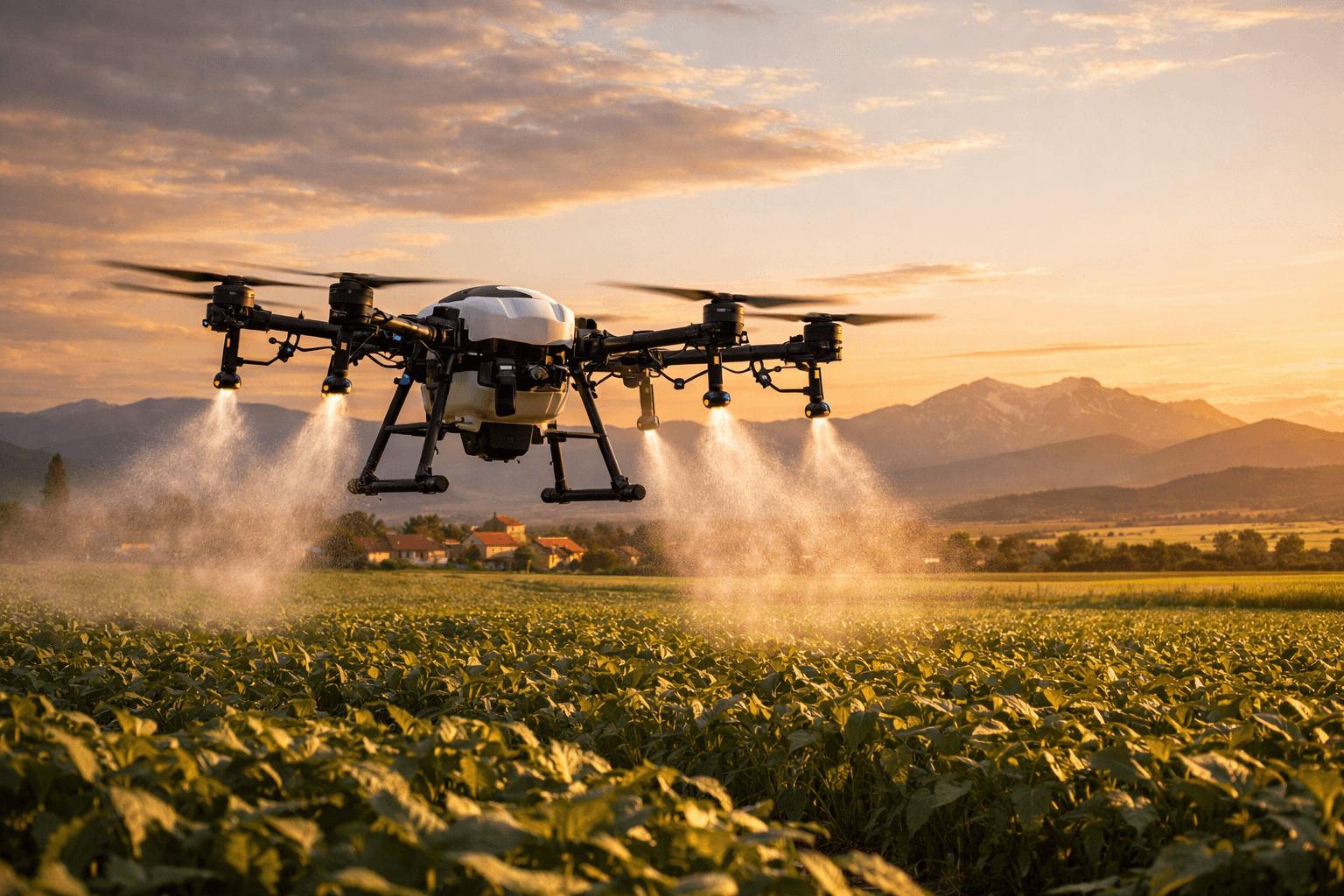
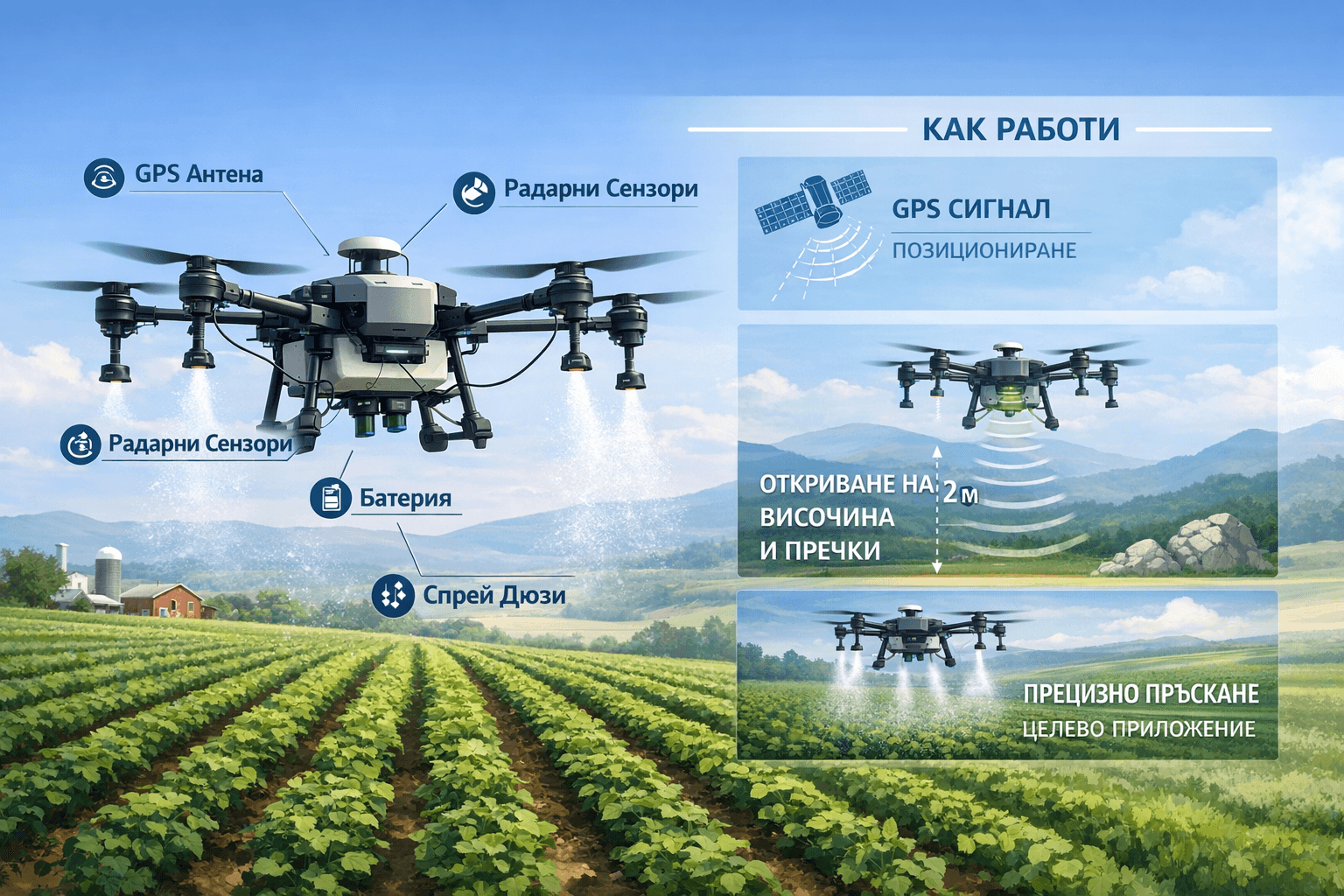
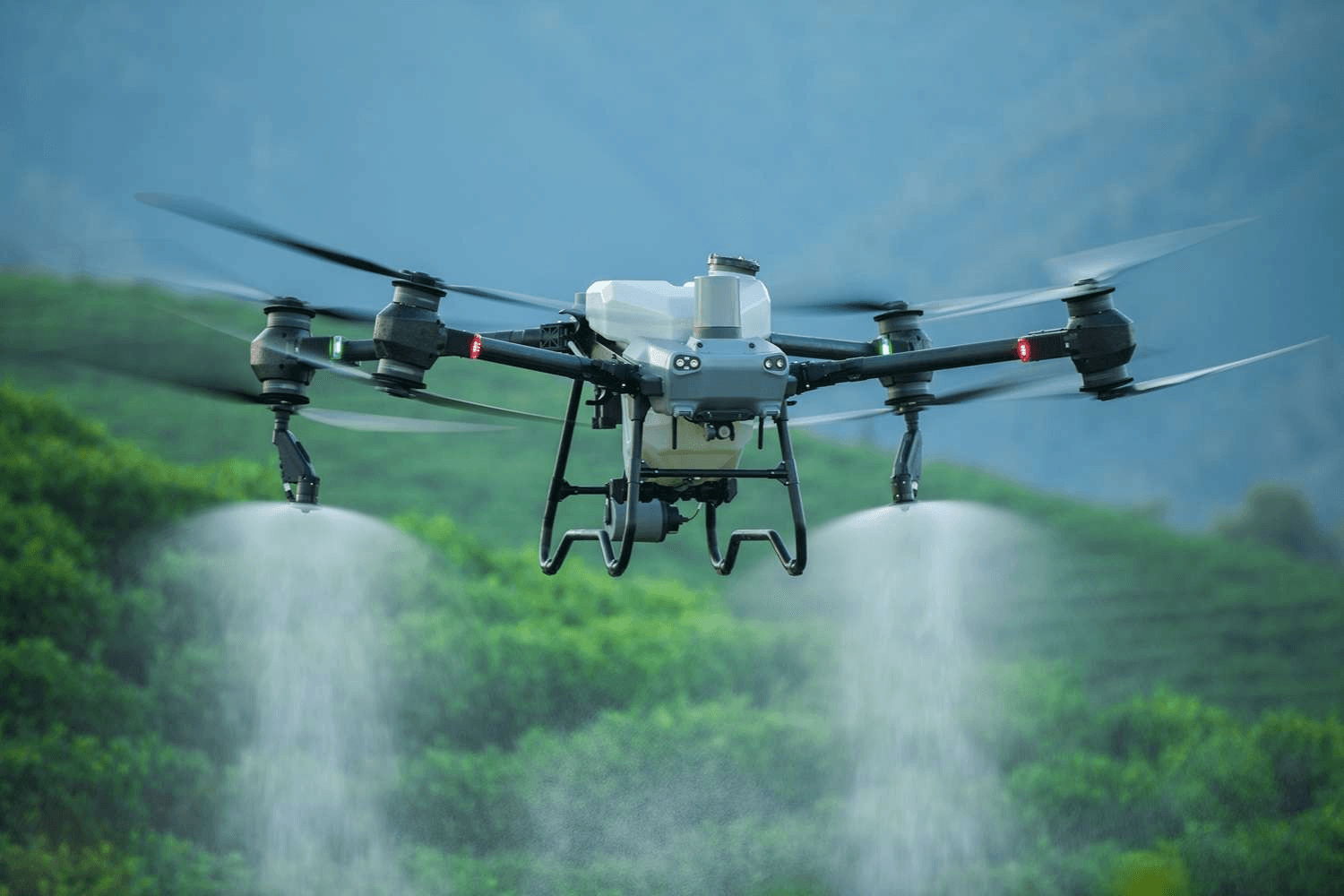
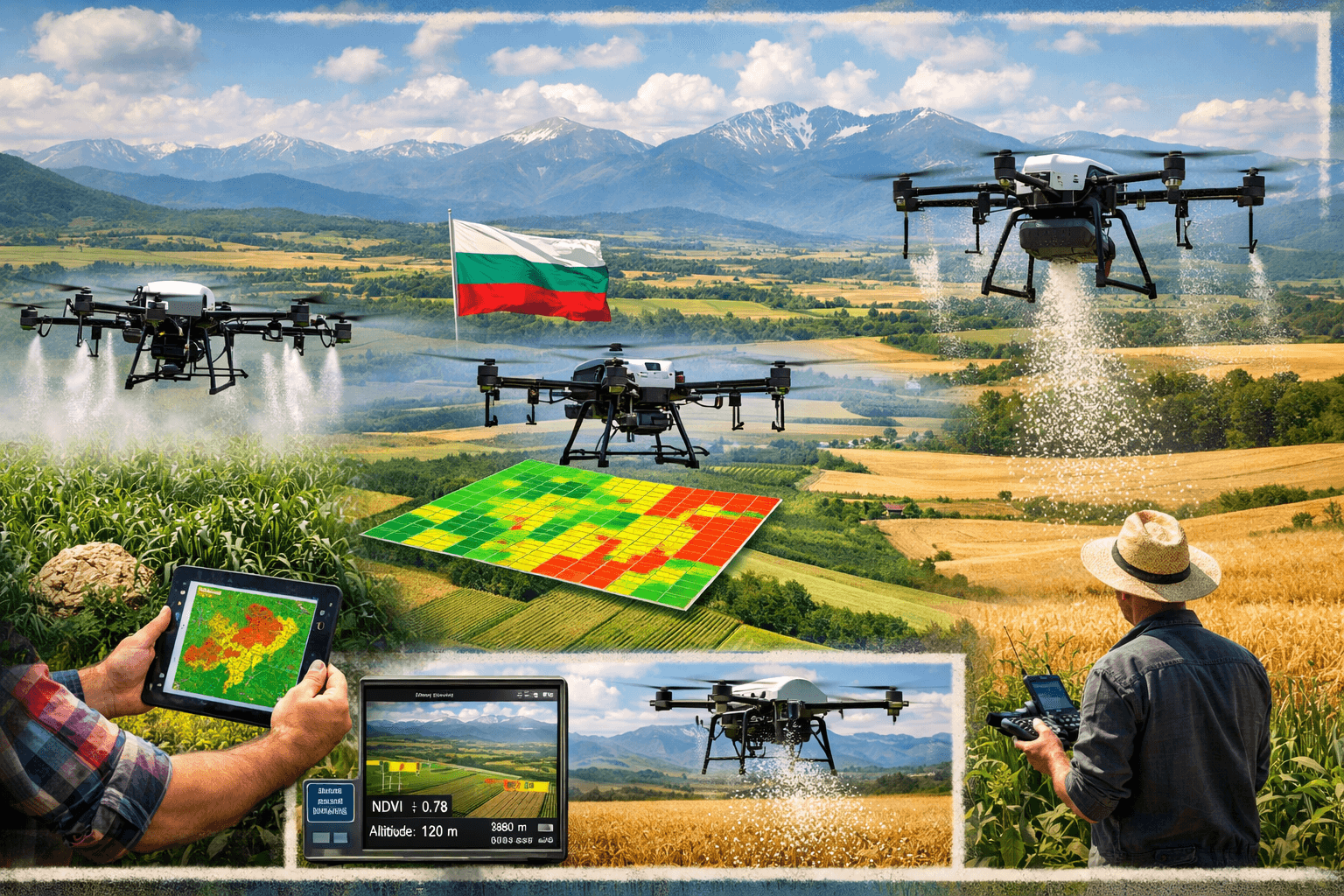
The DJI Agras T50 is AirAgro's primary tool for precision agriculture. For seeding, the drone is equipped with a spreading device (spreader) instead of the standard liquid tank.
Technical Parameters for Seeding
- Hopper capacity: up to 50 kg of seeds per load
- Spreading working width: 6–7 m
- Flight height: 2–4 m above the plants
- GPS accuracy: ±10 cm with RTK module – guarantees uniform coverage without overlap and gaps
- Autonomous flight: pre-set route by field map, without manual control
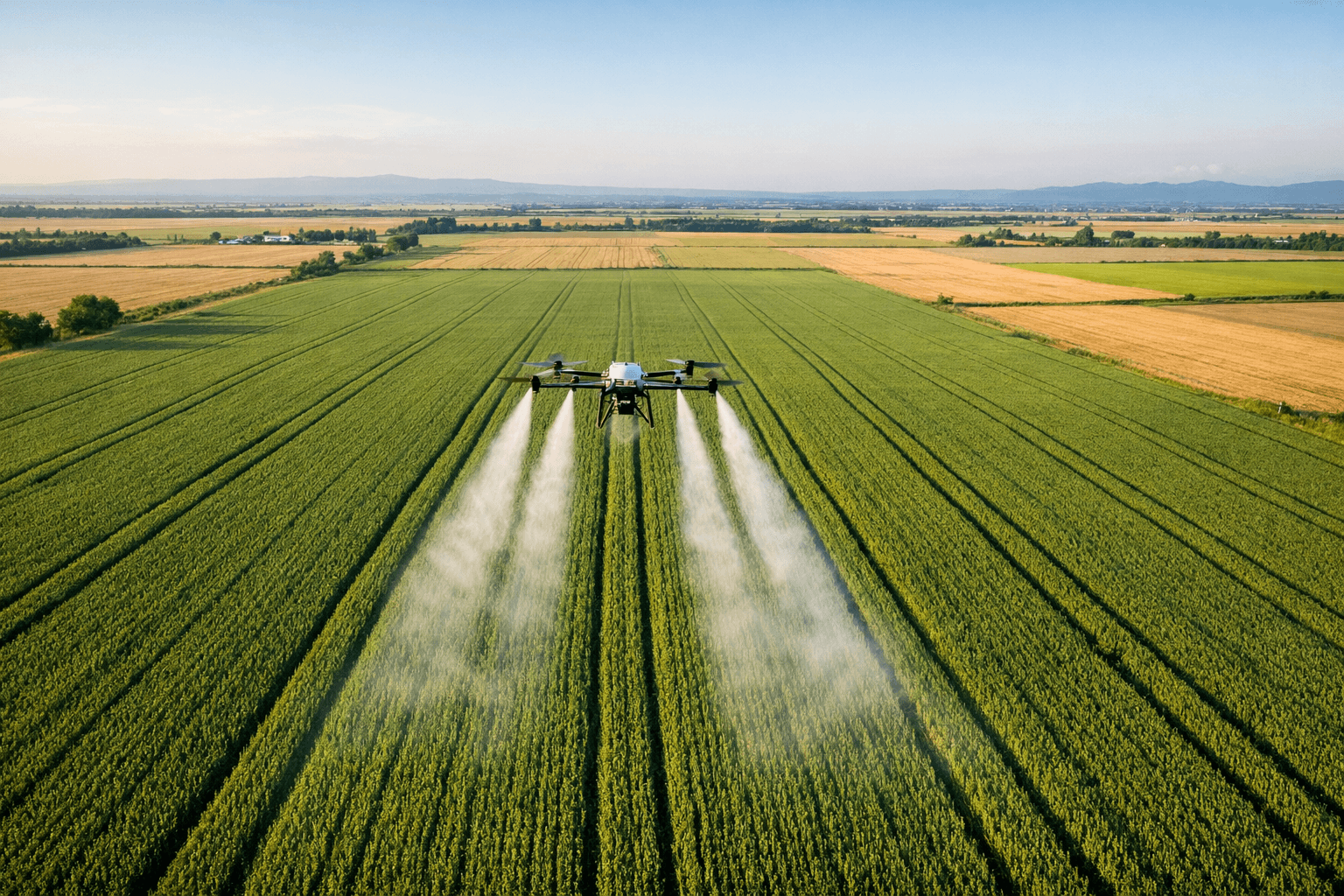
The operator sets the flow rate according to the rate for the specific crop (e.g. 10 kg/decare for vetch or 2 kg/decare for mustard). RTK navigation ensures uniform distribution across the entire area – difficult to achieve with manual broadcasting or a centrifugal spreader.
Optimal Seeding Time
The time of seeding is a critical factor for the success of cover crops. In Bulgarian conditions, the optimal periods are:
- Late July to early August: seeding into standing wheat or barley, 10–15 days before harvest. Seeds germinate under the shelter of the main crop.
- August to mid-September: after harvest of wheat, barley or rapeseed. Seeding should be done as early as possible to allow sufficient time for development before the cold.
- Late September to early October: seeding into standing maize or sunflower (for grain crops with a later harvest). Suitable for winter-hardy species such as rye and vetch.
For farms in Dobrudzha, where wheat harvest usually concludes in mid-July, the seeding window is longer. In Plovdiv Province and Haskovo, summer temperatures are higher and dry out the topsoil quickly – here pre-harvest drone seeding is especially valuable, as seeds end up in a moist environment under the leafy canopy.
Benefits for Soil Health
Preventing Erosion and Leaching
The root system holds soil particles in place, while the above-ground biomass reduces surface runoff. Research by the Institute of Soil Science N. Poushkarov shows that cover crops reduce nitrogen loss through leaching by up to 50–70%.
Improving Soil Structure
Roots create macropores that improve air exchange and water retention. After decomposition they form humus and stable soil aggregates – the effect is particularly noticeable in the chernozem soils of Dobrudzha and the alluvial soils of the Thracian Plain.
Increasing Organic Matter
The green biomass, ploughed in or mulched before spring sowing, is a natural organic fertiliser. One decare of a well-developed cover crop adds 200–400 kg of dry organic matter – equivalent to 1–2 tonnes of manure.
Cover Crops and the CAP – Green Requirements and Eco-Schemes
Since 2023, the EU's Common Agricultural Policy (CAP) has introduced stricter green requirements. Cover crops are an eligible practice under:
- GAEC 6 – minimum soil cover during sensitive periods (autumn and winter)
- GAEC 7 – crop rotation and diversification
- Eco-scheme for soil health – additional payment for farmers applying cover crops and minimum tillage
Farmers applying cover crops can receive additional subsidies of 10–25 BGN/decare through eco-schemes. Drone seeding is a fully permitted method – it is important that the crop is established and documented. AirAgro provides a GPS log of the seeded area, which serves as evidence during SFA inspections.
Practical Scenario: Cereal Producer from Pazardzhik
Georgi manages 3,000 decares of wheat and sunflower in the Pazardzhik area. He has not previously used cover crops because the window between wheat harvest (15–20 July) and the next treatment is too short for a tractor.
The drone solution: AirAgro seeds a mix of vetch (8 kg/decare) and mustard (1.5 kg/decare) directly into the standing wheat on 5–7 July. Seeds germinate under the dew and shade of the ears. After harvest the cover crops are already 5–8 cm tall and quickly cover the soil.
Result: by November the cover crop accumulates a dense green biomass. Georgi ploughs it in at the beginning of March. That spring the soil is looser, richer in nitrogen (saving 20–30% on nitrogen fertiliser) and considerably less weedy. He also receives a subsidy under the eco-scheme.
How Much Does Drone Seeding Cost
The price of drone seeding from AirAgro depends on the area, type of seed and location. Indicatively:
- Drone spreading service: 2–4 BGN/decare (excluding seed cost)
- Seeds: 3–8 BGN/decare depending on species and rate
- Total investment: 5–12 BGN/decare
This investment is recouped through savings on fertilisers, herbicides and better soil structure. Add the eco-scheme subsidy – and the net effect is positive from the first year.
Frequently Asked Questions
Do cover crops take moisture from the main crop?
No, if seeding is correctly timed. Seeding is done at the end of the main crop's growing season, when it no longer needs additional moisture. The cover crop develops after harvest, using autumn precipitation.
Can the drone seed in wind?
The DJI Agras T50 operates effectively in winds up to 6 m/s. In stronger wind, seeding is postponed to avoid disrupting the uniformity of distribution. AirAgro operators monitor meteorological conditions in real time.
What is the minimum area for drone seeding?
AirAgro serves areas of 100 decares and above for cover crop seeding. For smaller areas (vineyards, orchards) it is also possible upon individual request.
Do I need to till the soil before drone seeding?
It is not mandatory. When seeding into a standing crop, no tillage is done. After harvest, light discing or direct spreading onto stubble is sufficient – mustard, phacelia and vetch germinate well even without incorporation.
Do cover crops attract pests?
A correctly chosen mix does not attract pests but suppresses them. Mustard acts as a bio-fumigant against nematodes, while phacelia attracts beneficial insects. It is important that the cover crop is not from the same family as the main crop – for example, do not sow rapeseed before sunflower.
Request Cover Crop Seeding with a Drone
Improve your soil, reduce fertiliser costs and meet the green requirements of the CAP – with a single operation. AirAgro performs cover crop seeding with a drone in Plovdiv, Stara Zagora, Pazardzhik, Haskovo, Dobrudzha and the entire Thracian Plain.
Contact us:
Also explore our other services: drone spraying | foliar fertilisation of wheat | precision agriculture