Vineyard Spraying with Drone – Innovative Care for Vine Plots
Bulgaria has a millennia-old tradition in viticulture and winemaking. From the Thracian Plain to the Danubian Plain, from the Rose Valley to the Struma Valley – vineyards are an inseparable part of the Bulgarian landscape and culture. Today our country has around 60,000 hectares of vine plots that produce some of the highest quality wines in Southeastern Europe.
Care for vineyards, however, is labour-intensive and requires multiple treatments throughout the season. Vineyard spraying with a drone is a revolutionary solution that simplifies crop protection, provides excellent coverage and reduces labour costs.
Why Vineyards Need Special Protection
The vine is a perennial crop vulnerable to many diseases and pests. Effective crop protection is a prerequisite for healthy grapes and quality wine.
Main Vine Diseases
- Downy mildew (Plasmopara viticola) – one of the most dangerous diseases, affecting leaves, flowers and bunches. In warm wet weather it can destroy the entire harvest
- Powdery mildew / Oidium (Uncinula necator) – covers leaves and bunches with white coating, causes berry cracking
- Grey rot (Botrytis cinerea) – attacks ripening grapes, especially in wet weather
- Black rot – causes drying and mummification of berries
- ESCA – chronic disease of the wood
Main Pests
- Grape moth – larvae feed on flowers and berries
- Apple moth – damage facilitates grey rot entry
- Mites (red and yellow grape mite) – reduce photosynthetic activity of leaves
- Phylloxera – historically the most dangerous pest, though controlled through grafting
Challenges with Conventional Vineyard Spraying
Traditional spraying of vine plots has a number of challenges:
Access Between Rows
Vine plots are organised in rows with limited distance between them (usually 2–3 metres). Ground sprayers must be specialised and narrow, which limits their capacity and productivity.
Terrain and Slope
Many vine plots in Bulgaria are situated on hilly and sloped terrain, especially in the Thracian Valley and the Melnik area. Working with heavy machinery on a slope is risky and ineffective.
Leaf Mass Coverage
The vine develops a dense leaf mass that is difficult to treat from the ground. Conventional sprayers treat mainly the outer part of the leaf wall, while the inner part remains insufficiently protected.
Soil Compaction
Repeated machinery passes between rows compact the soil, hindering root system development and worsening drainage.
How the Drone Solves These Problems
Vineyard spraying with a drone overcomes all the above challenges:
Spraying from Above – Full Coverage
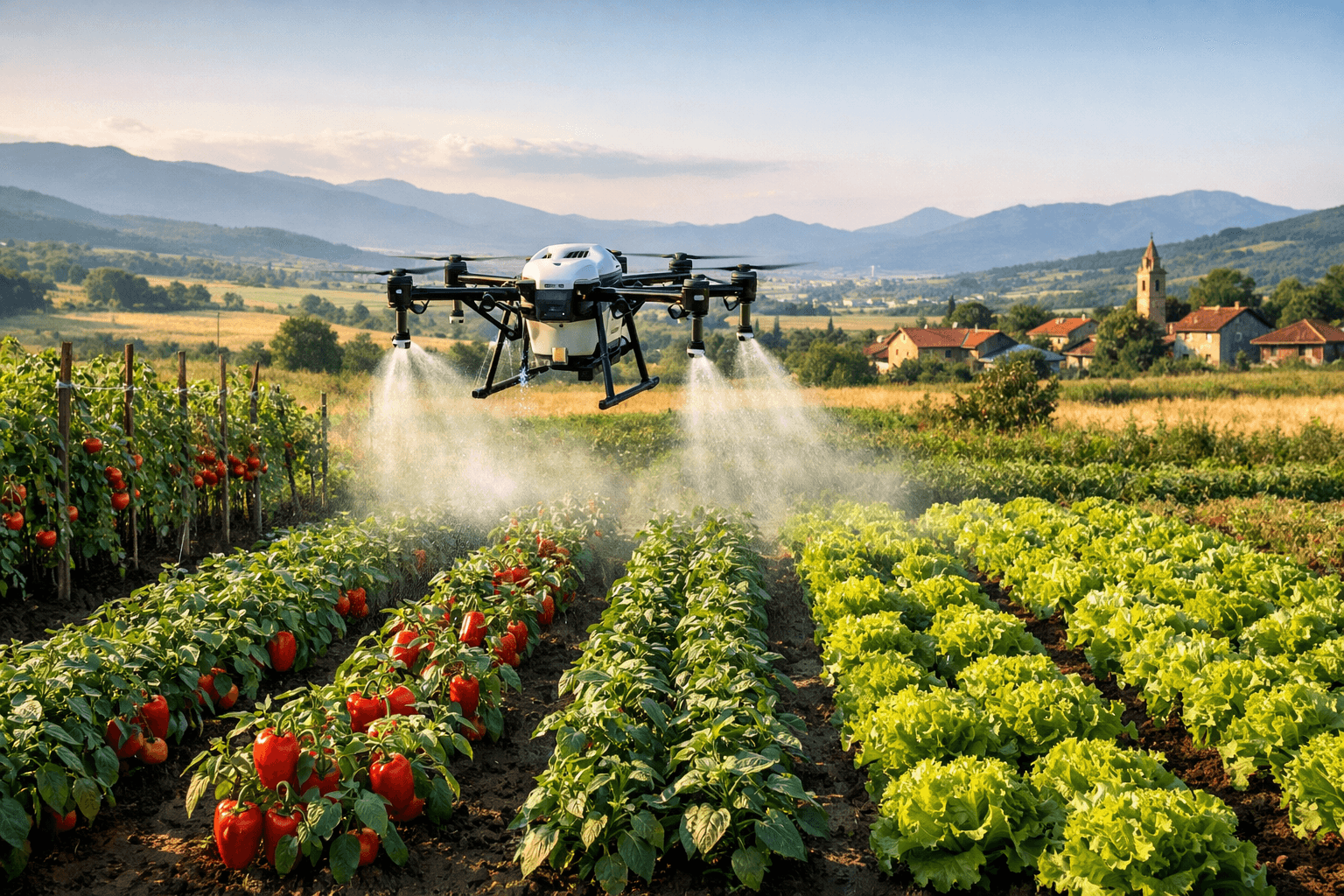
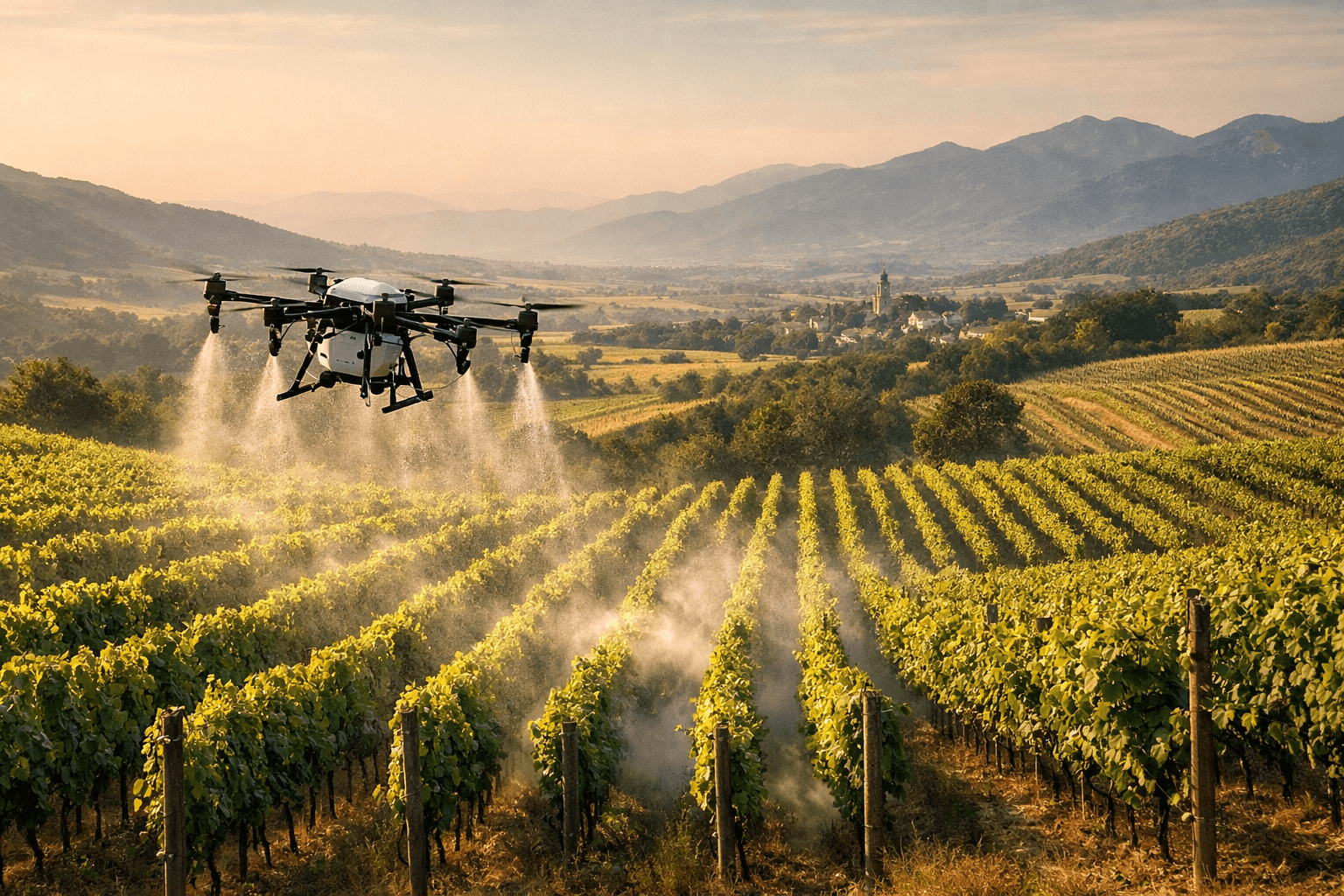
The DJI Agras T50 sprays from above, with the airflow from the rotors pressing the preparation downward through the leaf mass. This provides significantly better coverage, including of the inner part of the leaf wall and the underside of leaves – precisely where pathogens develop.
Work on Any Terrain
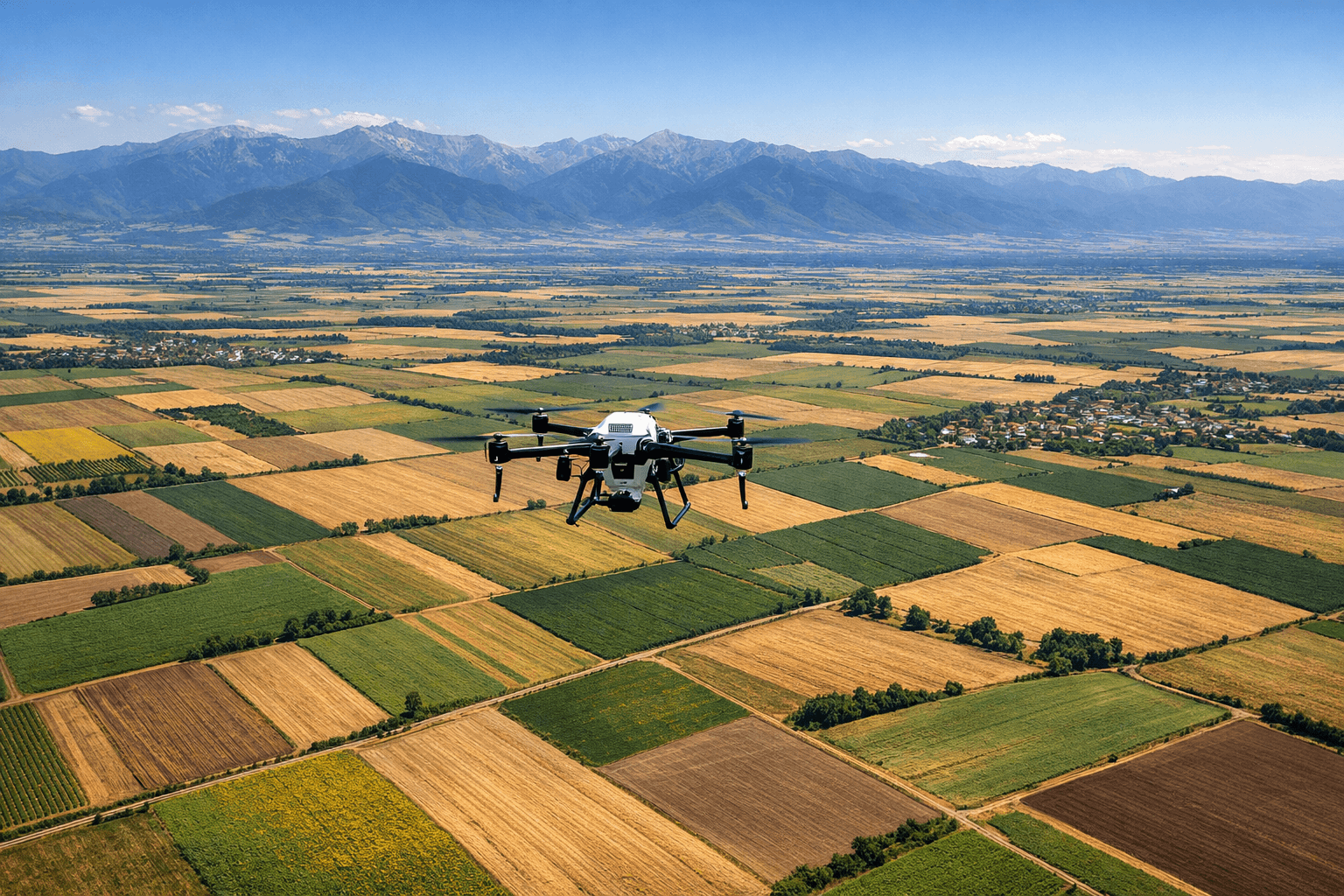
The drone flies at 2–3 metres above the vine plot and does not depend on terrain slope. Hilly vineyards, terraces, steep slopes – nothing is a problem for the drone. It treats flat fields and mountain vineyards equally effectively.
Zero Soil Compaction
The drone does not cross the terrain and does not compact the soil. The vine's root system remains undamaged, and soil structure is preserved.
Speed of Treatment
The DJI Agras T50 can treat significant areas in a short time. Even small vine plots of 20–50 decares are treated in minutes – something that would take hours with manual or mechanised spraying.
Learn more about how the agricultural drone works and the technology behind it.
When and How to Spray Vineyards with a Drone
Early Spring (March – April): First Prophylactic Spraying
After pruning, when the vine begins sap flow and bud swell, it is time for the first prophylactic treatment. Copper preparations or other fungicides are applied to prevent downy mildew and anthracnose.
Leaf Development Phase (April – May): Protection of Young Leaves
Young leaves are especially vulnerable to downy mildew and oidium. In this phase systemic or contact fungicides are applied. The drone provides gentle and even coverage of the delicate young leaves.
Pre-Flowering (May): Critical Treatment
Pre-flowering treatment is extremely important. Downy mildew infection of flowers can destroy the future harvest. With drone spraying the treatment can be performed at exactly the right moment, without waiting for the field to dry after rain.
During and After Flowering (June)
Continued protection against downy mildew and oidium. Insecticides against grape moth (first generation) are also applied if needed.
Berry Growth Phase (July)
Treatment against downy mildew, oidium and grey rot. In this phase the leaf mass is dense and the drone is especially effective – the airflow from the rotors penetrates through the leaves and provides coverage even in difficult-to-access places.
Beginning of Ripening (August)
The last fungicide treatments before harvest. It is important to observe the pre-harvest interval of the preparations used. The drone allows precise dosing, which is especially important in the pre-harvest period.
The Bulgarian Viticulture Context
Thracian Plain
The Thracian Plain is the heart of Bulgarian viticulture. Varieties such as Mavrud, Merlot and Cabernet Sauvignon are grown here for centuries. The warm climate and hilly relief make drones the ideal solution for spraying vineyards in the region.
Danubian Plain
In the northern viticulture areas (Ruse, Svishtov, Vidin) white varieties such as Misket, Chardonnay and Sauvignon Blanc predominate. The flat terrain allows effective drone work on large areas.
Southwestern Bulgaria
The Melnik area is known for its unique Shiroka Melnishka Loza variety. The steep terrain in Sandanski-Petrich makes ground spraying a challenge, and the drone is the ideal solution.
Rose Valley and Sub-Balkan Area
Vine plots around Karlovo, Sungurlare and Sliven also benefit from drone technology, especially in hilly zones.
Practical Tips for Vine Growers
Treatment Frequency
The vine usually requires 8–12 treatments per season, depending on meteorological conditions and disease pressure. In wet years the number may be higher.
Observe Intervals
Between individual treatments observe an interval of 7–14 days, depending on the preparation and conditions. In wet weather the interval should be shorter.
Fungicide Rotation
Use preparations from different groups to prevent the development of resistance. Alternate contact and systemic fungicides.
Optimal Spraying Conditions
- Temperature: 15–28 °C
- Wind: up to 3 m/s (lower wind is important for vineyards)
- Humidity: above 50%
- Early morning or evening
Price of Vineyard Spraying with a Drone
For pricing information see drone spraying price. The price depends on plot size, number of treatments and terrain.
For vineyards, drone spraying is especially economically effective, as it saves significant labour. Manual spraying of vine plots is expensive, slow and difficult to perform.
Orchards – Similar Application
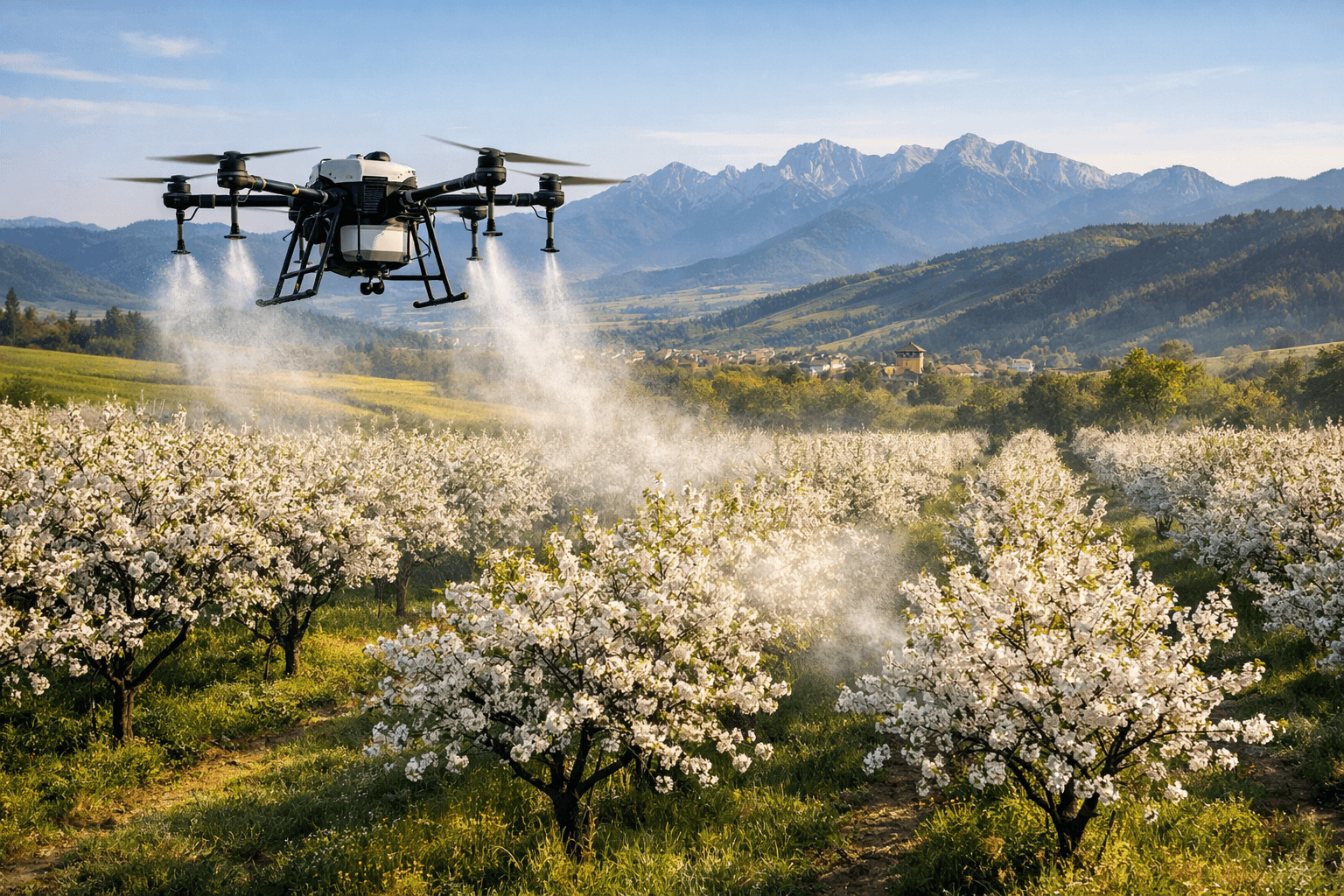
If besides vineyards you also grow fruit trees, see our article on orchard spraying with a drone. The drone treatment technology is similar and offers the same benefits.
Frequently Asked Questions
Can the drone damage the vine during spraying?
No. The drone flies at a safe height and does not come into contact with the plants. The airflow from the rotors is sufficient for preparation penetration but not so powerful that it would damage leaves or bunches.
Is the drone effective with dense leaf mass?
Yes. In fact the drone is more effective than ground sprayers with dense leaf mass, as it sprays from above and the airflow penetrates downward. Scientific research confirms better coverage of the inner zone of the leaf wall.
Is the drone suitable for small vineyards?
Absolutely. The drone is flexible and can treat both small plots of 5–10 decares and large ones of hundreds of decares. For small areas spraying takes just minutes.
What is the minimum size of a vine plot for drone spraying?
AirAgro treats plots of any size. Of course, for larger areas the price per decare is lower. For details see our price list.
Request a Free Consultation for Vineyard Spraying with a Drone
Your vineyards deserve the best care – from the first spring treatment to the last before harvest. Plan protection in advance with AirAgro!
What we offer to vine growers:
- Free consultation and farm inspection – our team will visit your vine plot and assess the terrain, vine condition and treatment needs
- Seasonal treatment plan – a detailed schedule of 8–12 sprayings, tailored to phenological phases and meteorological conditions
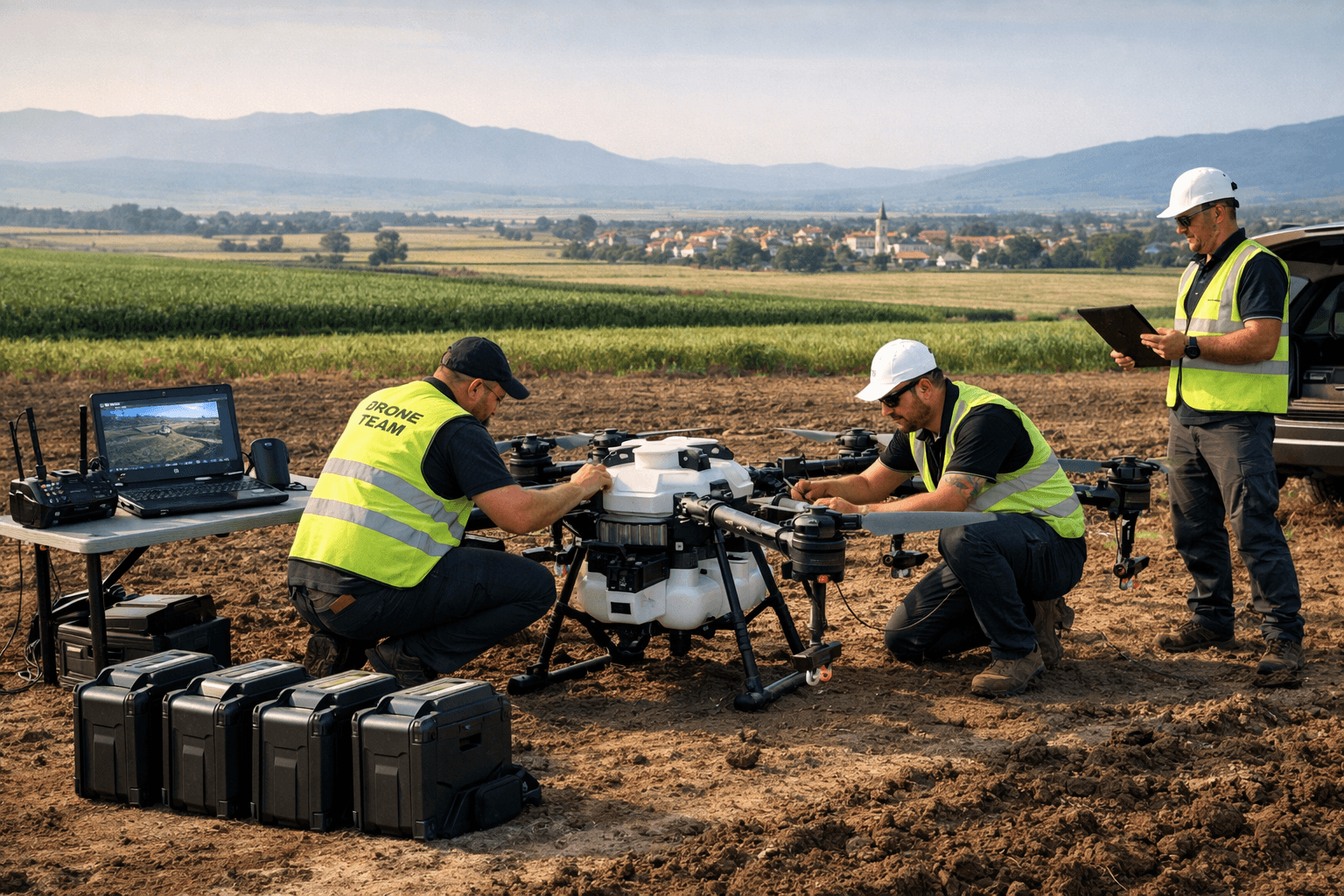
- Drone demonstration of the DJI Agras T50 – see on-site how the airflow from the rotors provides full coverage of the leaf mass, including the inner side of the leaf wall
- Work on steep terrain – no limitations from slope and relief
Contact us:
- 📞 Call us at +359 884 242 406 for a free consultation
- 🌐 Visit airagro.bg and request a farm inspection
- 📋 Request drone spraying for your vine plots
The first step is free – call and request a consultation and inspection of your vine plot. Together we will prepare a treatment plan for the entire season!
Learn more about the benefits of drones in agriculture and take a step forward in caring for your vineyards!